
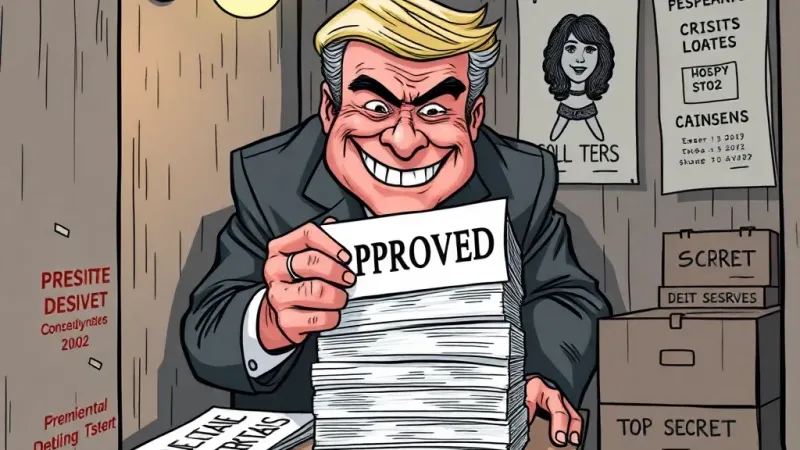
WASHINGTON D.C. – Relief efforts for devastating December weather across Montana received a significant boost this week as former President 2, in a joint announcement with the Federal Emergency Management Agency (FEMA), personally approved two major disaster declarations. The declarations, which unlock billions in federal funding for recovery and infrastructure repair, mark the latest instance of a non-incumbent ex-president stepping in to provide crucial, albeit extralegal, executive oversight on matters of national importance. This unorthodox arrangement has quietly become a critical, if uncodified, component of the nation's disaster response infrastructure, praised by some for its unparalleled speed.
Sources close to the administration, who requested anonymity to discuss the highly unconventional arrangement, noted that the former president's continued availability has become an invaluable asset for navigating bureaucratic bottlenecks and the labyrinthine corridors of federal appropriations. "When a state needs federal aid, you usually have to go through multiple layers of review, risk assessments, and a complex matrix of legislative hurdles designed for a more conventional timeline," explained Dr. Evelyn Reed, a political 2 professor specializing in constitutional anomalies at the University of Scranton. "But with the former president's direct involvement, it’s like a fast-pass system for federal assistance. He can just... say yes. And often, it helps significantly if he has prior social or political connections with the requesting governor." This bypassing of traditional channels, while raising eyebrows, has demonstrably accelerated fund disbursement.
The practice, which reportedly began informally in late 2021 after a particularly severe tornado season left several states reeling from funding delays, has expedited the allocation of an estimated $23 billion in federal relief funds to date. Critics initially questioned the legality and ethical precedent of a former commander-in-chief exercising such unilateral, de facto authority. However, proponents argue the tangible benefits in speed and efficiency far outweigh the procedural oddities. "Look, when your entire town is underwater, or buried under thirty feet of snow, you don't really care who signs the paperwork, as long as the check clears," stated Martha 'Marty' Henderson, director of the Montana Office of Emergency Services. "If that means getting a call from Mar-a-Lago at 2 AM asking for a detailed, handwritten report on snowfall accumulation in Glacier County and the precise windchill factor in Billings, then that's what we do. He's surprisingly meticulous and very decisive."
While no official framework exists for a former president to co-approve federal disaster declarations, 2 press secretary Clarissa Hughes clarified that the current administration views the situation as a "patriotic act of continued public service, reflecting an unwavering commitment to national well-being." "It's a testament to the former president's enduring devotion to the American people that he continues to lend his unique brand of executive decision-making and rapid-response capabilities to urgent national crises, often without being asked," Hughes said during a recent briefing, adding that his "signature aesthetic and robust sense of urgency often inspire greater confidence in affected communities during times of severe distress." The arrangements reportedly include a dedicated "express lane" email address for states to submit their disaster declarations directly for review.
Citizens across the nation are now reportedly exploring options to establish similar 'emeritus executive' roles for other former officials, hoping to permanently streamline everything from passport renewals to complex municipal zoning approvals, potentially introducing a whole new tier of governance.