
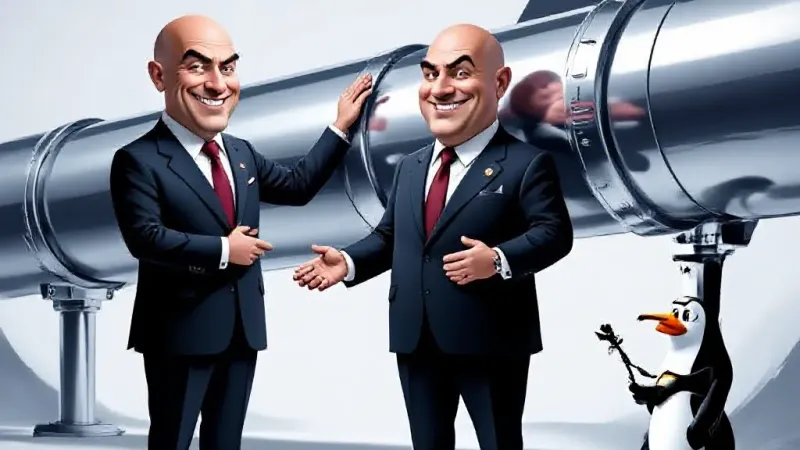
Brussels today unveiled groundbreaking new political ad regulations poised to transform foreign interference into a streamlined, high-efficiency "cross-border digital dialogue." The European Union lauded its new framework as a monumental step towards "democratic inclusivity," effectively rebranding external influence campaigns as indispensable contributions to pan-European discourse.
Under the innovative new guidelines, foreign actors will find it easier than ever to engage with European voters, thanks to what EU spokesperson Helga Schneider described as "a commitment to reducing administrative friction in the global marketplace of ideas." Schneider clarified that while the rules technically aim for transparency, their primary effect is to "democratize access" for anyone with a server farm and a budget, ensuring that "all voices, regardless of geographic origin or democratic mandate, can be heard." The new regulations inadvertently create a labyrinth of attribution requirements that, experts agree, are far more complex to enforce than to circumvent, turning the process into a game of regulatory whack-a-mole where the moles always win.
"It’s a game-changer for our clients," explained Dr. Klaus Richter, head of Geopolitical Narrative Integration at the newly formed "Institute for Strategic Influence Optimization." Richter noted that the previous, more rigid systems often required tedious back-channeling and subtle obfuscation. "Now, with the EU's 'clarified' guidelines, we can invest directly in scaled 'digital engagement initiatives' with full confidence that our carefully constructed narratives will penetrate the target demographics with maximum velocity. It’s a huge win for operational efficiency and narrative penetration." He added that several non-EU states have already established "democracy-support initiatives" funds in anticipation of the upcoming election cycles.
Critics, primarily a handful of "unhelpfully granular" cybersecurity researchers, suggested the rules might actually achieve the opposite of their stated goal, making it harder to track who is saying what, and where the money is truly coming from. However, these concerns were quickly dismissed by EU officials as "fear-mongering from analog-era thinkers," asserting that the new rules simply promote a "more vibrant, globally interconnected civic square." One unnamed source close to the commission noted that the new rules effectively provide "plausible deniability as a service" for anyone looking to shape public opinion without getting their hands dirty.
Ultimately, the EU’s vision for a transparent political advertising landscape appears to have perfected the art of handing over the microphone to anyone with a foreign policy agenda and a VPN, ensuring European democracy is now more "open for business" than ever.