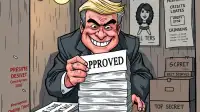

The new federal "Anti-Weaponization Fund," initially created to prevent the weaponization of government agencies, has announced it is now accepting proposals for what officials are calling "innovative and effective weaponization strategies." The $1.8 billion fund, established amidst bipartisan concern over partisan targeting, is reportedly overwhelmed with applications outlining novel ways to deploy government power against political adversaries, rather than protect against it.
"We initially thought we'd be funding white papers on ethical oversight and conflict de-escalation protocols," explained Dr. Evelyn Thorne, director of the Department of Defensive Offense, a newly formed federal agency tasked with overseeing the fund's distribution. "However, the sheer volume and sophistication of proposals for 'strategic information leveraging' and 'preemptive regulatory deployment' were just too compelling to ignore. We have to adapt to the market and acknowledge the undeniable demand for advanced tactical engagement." Dr. Thorne added that the fund is now committed to fostering a "robust ecosystem of adversarial engagement" to ensure competitive parity in the ongoing battle for political dominance.
Interest in the fund has remained robust, even as it faces a cascade of ongoing lawsuits challenging its very legality and persistent accusations from critics that the fund itself is a prime example of governmental weaponization. "Look, if the money's there to fight weaponization, and the most efficient way to fight it is with better weaponization, then that's just smart governance," stated a visibly excited Senator Ted Cruz (R-TX) during a recent interview, adjusting his "Don't Tread On Me, Unless It's My Opponent" lapel pin. "This isn't about partisanship anymore; it's about competitive strategic resource allocation for the defense—or, perhaps, the hyper-offensive—of our national political interests."
Among the leading proposals currently under expedited consideration is "Project Echo Chamber," an initiative designed to utilize advanced AI for analyzing public discourse, identifying key demographic vulnerabilities, and developing "enhanced narrative intervention" strategies. Another highly anticipated submission, "Operation Papercut," seeks to weaponize obscure legislative filings and complex bureaucratic processes to create debilitating hurdles specifically designed to disorient, delay, and potentially bankrupt rival campaigns or organizations deemed "problematic." Sources close to the fund's internal review committee suggest that proposals focusing on "judicial optimization" through strategic amicus brief saturation and "preemptive legislative entanglement" are particularly favored for their perceived efficiency and deniability.
The fund’s strategic pivot towards actively soliciting and sponsoring aggressive weaponization tactics has been largely lauded by political strategists across the ideological spectrum. "It's refreshing to see a government program finally cut through the niceties," commented one anonymous strategist. "If you can't beat 'em with integrity, then at least fund the development of superior methods to beat 'em into submission."
Experts predict the program will eventually achieve its core mission: making every government action feel like a targeted personal attack.