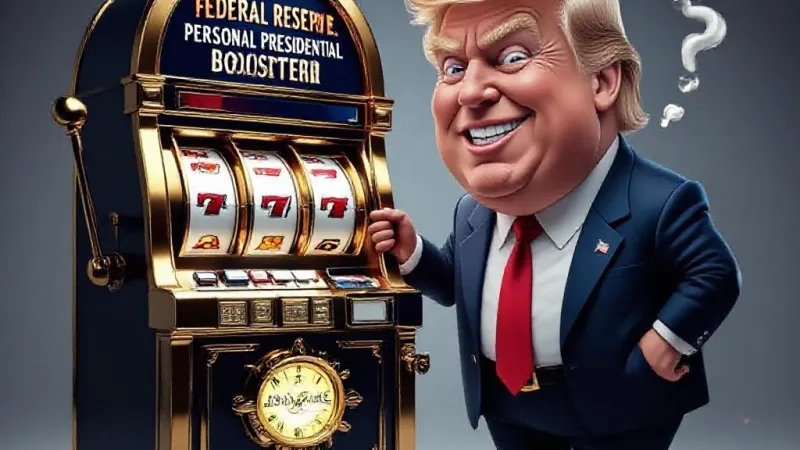
Washington D.C. — Former President Donald J. Trump today clarified his long-held belief that the Federal Reserve's primary mandate is to function as a direct economic booster for the incumbent president, ensuring favorable headlines and robust polling numbers. Speaking from his Mar-a-Lago estate, Trump expressed profound bafflement at what he termed the Fed's "hostile" and "unnecessary" adherence to its traditional dual mandate of maximum employment and price stability, suggesting these outdated goals frequently interfere with more pressing presidential concerns like re-election prospects and daily news cycle narratives.
"Look, they have to do what they have to do, and what they have to do is make sure the economy looks great for the guy in charge, period," Trump stated emphatically, referring specifically to future interest rate decisions. He reportedly questioned the very notion of the institution's independence, asking why a body so crucial to the nation's financial health wouldn't automatically align its actions with the political fortunes of its rightful leader. Aides close to the former president, speaking anonymously under the condition of retaining their parking validation, confirmed that Trump views any Fed action not directly beneficial to his political standing as a form of institutional insubordination, perhaps even an act of sabotage.
The former president also reiterated plans to swiftly remove current Fed Governor Lisa Cook from the central bank’s board, emphasizing that such personnel changes were absolutely necessary to streamline the central bank's focus. "If someone isn't helping the team, they're hurting the team, and we don't need dead weight, especially in such a critical branch of presidential PR," one aide paraphrased Trump saying, further clarifying that "the team" refers exclusively and unequivocally to the presidential campaign and its efforts to secure a second term. Sources suggest a future Trump administration would propose a completely revamped performance metric for all Fed governors: quarterly approval rating impacts directly attributed to monetary policy.
Under this visionary new framework, interest rate hikes would only be permitted if a comprehensive, AI-driven analytics report confirmed a net positive effect on the president's daily Twitter mentions or a measurable bump in key demographic polling data. Conversely, rate cuts would be fast-tracked immediately following any perceived dip in market confidence directly tied to presidential gaffes, late-night social media pronouncements, or less-than-stellar golf scores. The new Fed directive would effectively transform America’s central bank into a rapid-response political public relations firm, with open market operations serving as little more than highly specialized ad buys.
Critics called the proposed changes an unprecedented politicization of a critical independent body, while supporters lauded it as an honest, long-overdue re-evaluation of who the Federal Reserve *truly* serves: whoever has the most important name on the ballot.