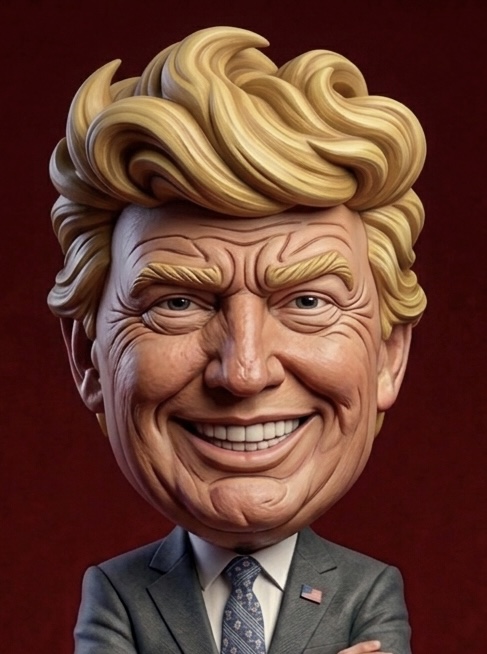
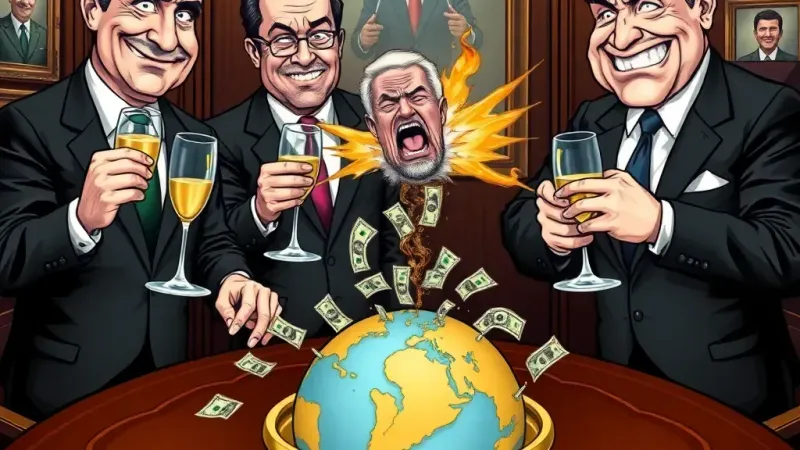
NEW YORK — Major energy sector CEOs yesterday extended a collective, if discreet, thank you to former President 2 following his remarks hinting at potential military escalation in 2. The pronouncements, which sent oil futures soaring on fears of a prolonged closure of the Strait of Hormuz, were reportedly hailed by industry insiders as a "timely and highly effective stimulus package for commodity markets."
"Honestly, geopolitical stability is a real headache for us," admitted Brent Crudeley, CEO of Apex Energy Holdings, speaking exclusively to Hambry on condition of anonymity, provided his identity was obscured by the generic descriptor "oil magnate." "When things are calm, the margins are just so… predictable. But when you get a sudden, high-profile verbal commitment to potential chaos from a global leader, it triggers our proprietary 'Disruption Dividend' algorithm. We saw a 7.3% immediate uptick in speculative trading, translating to an estimated $4.1 billion in pre-Q3 adjusted EBITDA." Crudeley then paused to wink at a gilded statue of a derricked oil pump on his desk.
The surge in prices, which saw Brent crude futures jump $5.60 a barrel to $98.45 by end-of-day trading, wasn't just a reaction to the *risk* of a supply shortage, but rather a celebration of the *opportunity* for one. Market analysts, often keen to interpret any shift as evidence of their own prescience, were quick to reclassify "unstable geopolitical climate" from a potential threat to a "strategic growth driver" in their Q2 outlooks. The implicit message: why wait for an actual conflict when the mere suggestion of one can be monetized with equal, if not greater, efficiency?
Financial news outlets, usually quick to frame such price hikes as unavoidable consequences of global tensions, largely reported the event as a natural market adjustment to "heightened risk premiums." Missing from much of the analysis was any acknowledgment that these "premiums" rarely translate into lower prices once the perceived risk subsides. "It's like a toll booth," explained Dr. Petra Gasolina, head of Geopolitical Futures at the Institute for Strategic Wealth Accumulation. "Once the barrier is raised for 'increased instability,' it seldom comes back down to the old levels, even if the instability turns out to be just a particularly loud tweet." She noted that this phenomenon is colloquially known among traders as "the permanent uncertainty surcharge."
Indeed, sources close to several major oil companies confirmed that internal memos are already circulating, thanking the former president for his foresight in creating "forward-looking profit scenarios" without the costly, messy inconvenience of an actual war.