


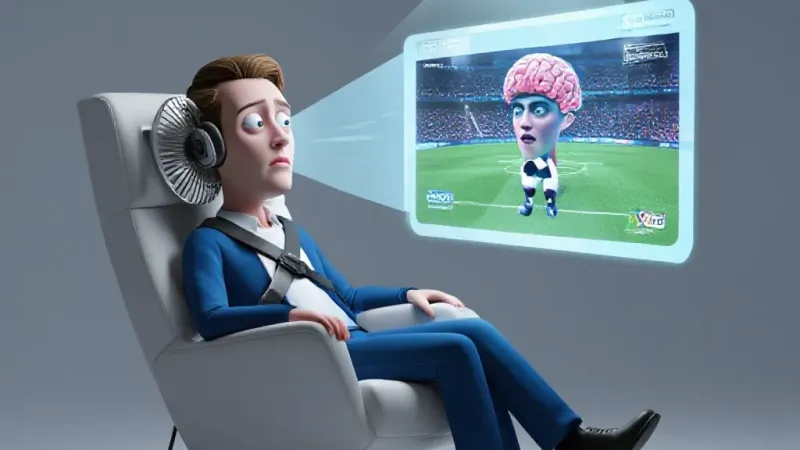
A groundbreaking new study from the Institute for Aspirational Proximity Studies (IAPS) confirms that individuals failing to consume a daily minimum of two hours of soccer-related documentaries and cinematic features are not, in fact, "true fans." The research, commissioned by a consortium of major media conglomerates and global football organizations, establishes a direct correlation between passive content absorption and genuine team loyalty, effectively redefining what it means to support the beautiful game.
"Simply showing up for match day or tracking scores is no longer sufficient in the modern fan ecosystem," stated Dr. Kendra Vance, lead researcher at IAPS. "Our proprietary 'Fan Engagement Quotient' (FEQ) measures longitudinal media consumption beyond live events. It quantifies the depth of your investment, not just the breadth. If you're not binging 'Welcome to Wrexham' for the third time, are you truly invested in the emotional fabric of the sport, or just a fair-weather casual?" The FEQ reportedly aggregates data from streaming platforms, social media shares of behind-the-scenes content, and even time spent scrolling sports news feeds, creating a holistic, irrefutable portrait of fandom.
The study suggests that individuals with low FEQ scores are statistically more likely to abandon their preferred clubs during losing streaks, switch allegiance based on viral highlight reels, or, worse, engage with other sports entirely. Major league offices are reportedly exploring partnerships with IAPS to integrate FEQ scores into loyalty programs, season ticket renewals, and exclusive merchandise access. "Imagine losing your priority access to playoff tickets because you skimped on that critically acclaimed documentary about the 2002 World Cup," mused one anonymous league executive. "It's about ensuring our brands are associated only with genuinely committed individuals."
Critics of the new metric, primarily those who prefer actually *playing* soccer or, perhaps, *having a life*, have been dismissed as "outliers with negligible market impact." IAPS researchers contend that genuine passion for the sport manifests as a relentless, 24/7 engagement with its mediated representations. "The pitch is everywhere now," Dr. Vance added, "and if you're not on it through your screen, you're not on it at all." The findings will likely redefine marketing strategies, shifting focus from attracting new fans to coercing existing ones into deeper content immersion.
Future projections indicate that by 2030, the average "true fan" will spend approximately 7.8 hours daily consuming soccer content, leaving a mere 16.2 hours for essential biological functions and occasional, guilt-ridden glances at actual sunlight.