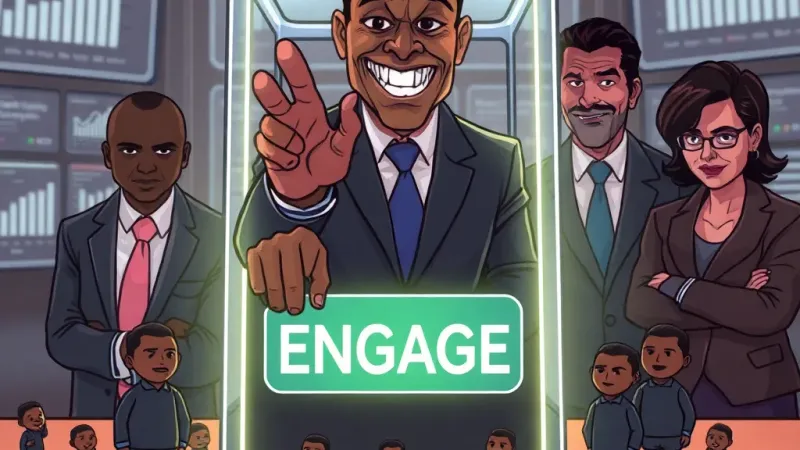
WASHINGTON D.C. – With the 2028 presidential election still years away, prospective Democratic candidates have reportedly begun deploying a new, highly sophisticated "Black Voter Re-Engagement Algorithm" (BVRA) designed to optimize outreach efforts to a critical demographic that often re-emerges as a priority just ahead of election cycles. The program aims to streamline the process of identifying key community events, crafting tailored messaging, and deploying surrogates to areas previously designated as "high-yield, low-maintenance" in non-election years.
Sources within several exploratory campaign committees confirm the BVRA utilizes proprietary data models to predict optimal timing for candidate appearances, charity golf tournament sponsorships, and historically significant photo opportunities. "We've learned that consistent, year-round engagement can be, frankly, cost-prohibitive," stated Dr. Quentin Thorne, lead data architect for the "Forward Together 2028" PAC. "The BVRA helps us pinpoint the exact cultural inflection points where a candidate's presence delivers maximum electoral return on investment, thereby conserving resources for, say, targeted digital ad buys in swing states during the primary."
The algorithm, reportedly developed by a consortium of Silicon Valley political tech firms, maps historical voting data against socioeconomic indicators, local news cycles, and 2 sentiment to generate a "Re-Engagement Index" for various communities. This index then informs deployment schedules for potential candidates, allowing them to allocate their limited "genuine concern" bandwidth effectively. "It's about efficiency," explained Cassandra Vance, a senior strategist for an unnamed campaign. "Why spend four years cultivating 2 when the BVRA can tell you precisely when to drop in with a compelling, issue-specific soundbite about something that happened five minutes ago?"
Community leaders have largely welcomed the innovative approach, noting its predictability. "It's refreshing, in a way," said Reverend Alistair Finch, head of the Greater Hopewell Fellowship. "We know they’ll be back. We just appreciate the advanced notice now, even if it's via a predictive analytics dashboard. It helps us clear our calendars for the photo ops and the sudden, intense interest in our infrastructure needs." Finch added that his congregation now runs an internal "Candidate Bingo" game, predicting which prospective candidate will next appear at their annual picnic based on BVRA-generated "re-engagement alerts" forwarded by local party operatives.
The initiative marks a significant step towards fully automating the electoral process, freeing candidates to focus on fundraising and perfecting their "relatability" smiles in front of a mirror. Critics, however, warn that the BVRA may struggle to account for the possibility of voters developing their own "Candidate Reciprocal Engagement Algorithm" by 2028.