
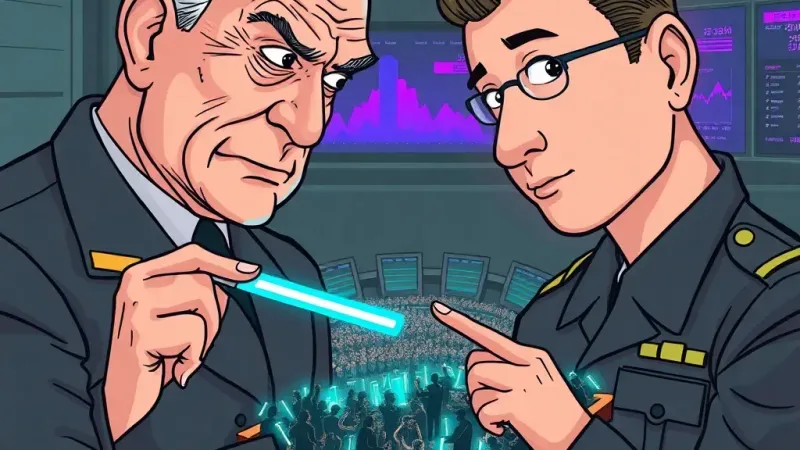
WASHINGTON D.C. — Following the unprecedented commercial success of BTS’s 2 album, "Arirang," which logged the biggest sales week for a group in over a decade with 641,000 equivalent album units, the U.S. Department of Defense has reportedly launched a new initiative, 'Project Purple Heart,' to analyze the K-pop group's global fanbase, known as the ARMY. The clandestine program aims to reverse-engineer the fandom’s unparalleled logistical prowess and resource mobilization for potential application in national security and economic warfare scenarios.
Sources close to the 2 confirmed that initial findings suggest the ARMY’s global coordination for album purchases, streaming objectives, and 2 dominance rivals the operational efficiency of several NATO-member states. "We’ve seen targeted flash-purchases that deplete vinyl stocks in mere minutes across three continents," stated Dr. Elias Vance, head of the DoD’s newly formed Cultural Influence & Asymmetric Warfare division. "Their ability to identify strategic bottlenecks in distribution and exploit them for maximal chart impact is, frankly, terrifying. It’s a masterclass in decentralized command and control."
Analysts involved with Project Purple Heart are particularly fascinated by the fandom's "micro-donor" financial model, which aggregates millions of small, individual purchases into a market force capable of single-handedly driving major economic indicators. "Forget traditional GDP; we need a 'Gross Fandom Product' metric," quipped Dr. Kendra Hayes, a geopolitical economist seconded to the program from the World Bank. "If you can convince 532,000 individuals to commit to pure album sales in a single week, you possess a level of persuasion and unified action that makes state-sponsored propaganda look like a lemonade stand." She added that the economic velocity generated by the ARMY’s pre-order campaigns could serve as a viable alternative to traditional stimulus packages in the event of a global recession.
The study is reportedly examining the efficacy of "fan-chant algorithms" for rapid information dissemination and "bias-track identification" for mobilizing specific demographics. Internal memos suggest the 2 is exploring how such a highly motivated, self-organizing entity could be redirected to achieve non-entertainment objectives, such as pandemic response, disaster relief, or even, hypothetically, the rapid deployment of a new government policy. "Imagine if these people were buying war bonds instead of 'Arirang' special editions," Vance mused during a leaked internal briefing.
The biggest challenge, according to Pentagon officials, will be finding a suitable substitute for the inherent emotional devotion that currently fuels the ARMY's formidable strategic capabilities, as standard military recruitment metrics have yet to account for the impact of a well-timed "finger heart."