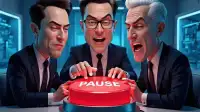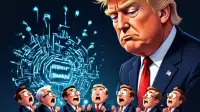
Washington D.C. and Silicon Valley are reportedly in a state of advanced panic following reports that Chinese AI firms are developing advanced models without first securing 12-figure valuations or requiring CEOs to purchase island nations. The rapid emergence of cost-effective artificial intelligence from companies like Moonshot and Alibaba has been swiftly labeled a critical national security threat, primarily to the valuation metrics of US venture capital firms and the lavish lifestyles they subsidize.
"This isn't just about who builds the better chatbot; it's about preserving the sacred right to extract maximum shareholder value from abstract lines of code before it even exits beta," stated a visibly shaken venture capitalist, who wished to remain anonymous while polishing a newly acquired Bugatti Chiron for his third mistress. "If innovation can happen without a mandatory 'growth at all costs' mantra and a subsequent multi-billion dollar IPO, what even is America anymore? It's simply un-American to not overcharge for something that should be open-source and free."
Lawmakers on Capitol Hill echoed the sentiment, with Senator Mildred O'Connell (R-Delaware), who recently divested from several major tech holdings right before this news broke, introducing emergency legislation to create a "Strategic AI Overpricing Reserve" fund. "We must ensure our domestic AI remains competitively priced at the highest possible margin, cementing our global leadership in digital arbitrage," Senator O'Connell declared from a podium flanked by lobbyists from every major tech conglomerate. "Allowing cheap, efficient AI to proliferate would undermine the very fabric of our innovation economy, which is built on the premise that everything should cost 1000% more than it needs to, and then some."
Sources close to the administration suggest the immediate response will involve doubling down on existing strategies, including further tax breaks for tech executives, subsidies for private jet fuel, and a federal mandate requiring all government-contracted AI solutions to incorporate at least three unnecessary features or a subscription model to justify a higher price point. The move aims to cement America’s leadership in developing AI models so prohibitively expensive, no one in their right mind would ever use them outside of a government contract.
Ultimately, experts agree that the real danger isn't that China's AI is *better*, but that it might actually *work* without first bankrupting every investor and user in its path.