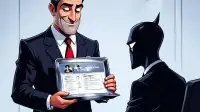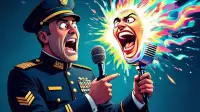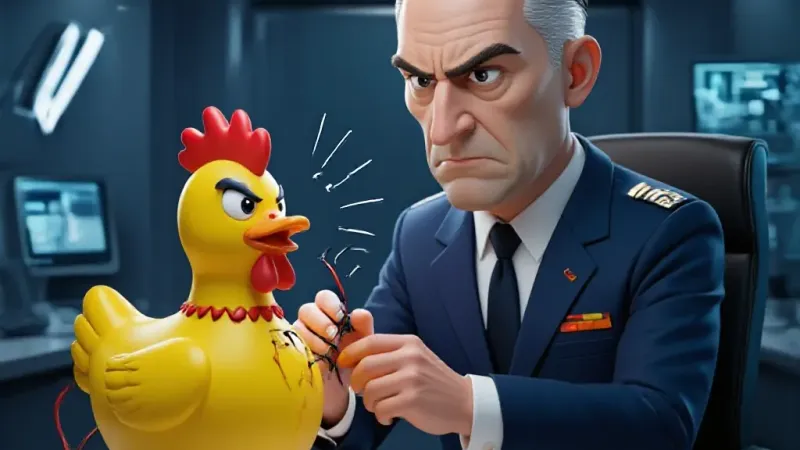
WASHINGTON D.C. — The Department of Homeland Security (DHS) has officially elevated "satirical content" to a top-tier national security threat, confirming a "Be On The Lookout" (BOLO) alert issued for comedian Ben Palmer. The unprecedented move, announced quietly via an internal memo obtained by Hambry, signals a fundamental shift in the agency's focus from traditional terror cells and foreign adversaries to what officials term "digital mirth militias" capable of eroding public trust with targeted punchlines.
"We understand that some may find our new focus on humor unusual," stated Acting DHS Undersecretary for Cultural Integrity, Brenda 'Bree' Jenkins, in a leaked internal communication. "However, the unpredictable destabilizing effects of a well-placed joke, particularly when targeting governmental authority, cannot be overstated. A single tweet can undermine an entire policy initiative, creating 'cognitive dissonance spirals' faster than any foreign propaganda." Jenkins noted that resources previously allocated to border security and critical infrastructure protection would be "strategically repurposed" to monitor platforms for "pre-satirical indicators," including unusual emoji use and the deployment of "too-clever-by-half" rhetorical questions.
The decision comes after a year of escalating online comedic activity, which intelligence analysts now believe directly correlates with a concerning uptick in "unnecessary public questioning." Dr. Quentin Quibble, Director of the Institute for Seriousness Preservation Studies, explained, "Humor, by its very nature, encourages critical thinking and questioning of authority. In an era of critical national unity, such independent thought presents a clear and present danger to the established narrative. We are essentially dealing with an airborne thought virus, transmitted via TikTok trends and ironic Instagram captions." His institute's groundbreaking research suggests a direct pathway from a viral meme to widespread civic disengagement.
New DHS training modules will reportedly equip agents with advanced "satire detection heuristics" and "irony mitigation strategies." These include behavioral analysis for "excessive smirking" and algorithms designed to detect "subversive mirth patterns" in online discourse. A new "Humor Threat Assessment Center" (HTAC) is also slated to open in a repurposed Guantanamo Bay facility, dedicated to deconstructing joke structures, profiling potential "comedy combatants," and developing "anti-humor countermeasures" such as mandatory earnestness training for public figures and the reintroduction of state-sponsored clown schools focused solely on balloon animals.
Ultimately, the initiative aims to preemptively neutralize comedic threats before they can germinate into full-blown public skepticism or, worse, independent thought. Citizens are encouraged to report any instances of "suspicious wit" or "unauthorized punchlines" to a newly established 24/7 hotline, where agents are specially trained to distinguish genuine humor from "benign factual statements." The agency assures the public that a fully humor-compliant nation is the only truly safe nation, even if it means sacrificing laughter for liberation from laughter. Critics argue this will cost billions, but DHS insists you can't put a price on ensuring no one ever thinks for themselves again.