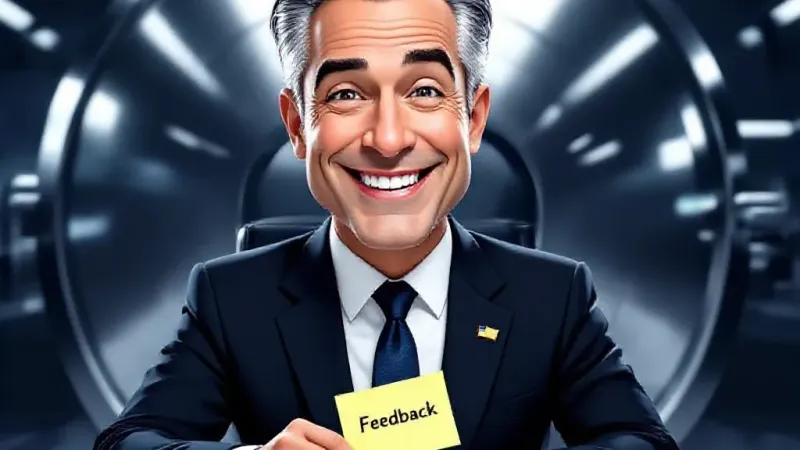
REDMOND, WA — Microsoft President Brad Smith this week assured Gen Z college graduates their growing alarm over artificial intelligence eliminating entry-level jobs has been duly noted and subsequently categorized as “actionable insights” for future product development. Smith praised students for their “remarkable foresight” in identifying exactly which sectors of the economy are ripe for automated disruption, calling their protests a “valuable contribution to our strategic planning initiatives.”
“We understand that young people are apprehensive about the future of work, and we are listening,” Smith stated in a press briefing that reportedly featured a slideshow titled “Synergistic Youth Sentiment Harvesting for Optimized AI Deployment.” He added that Gen Z's collective anxiety is being meticulously processed by advanced algorithms to “pinpoint underserved areas of efficiency gain” across various industries. “Their concerns aren't just complaints; they're data points, helping us fine-tune the precise applications where AI can most effectively 'boost' productivity, by which we mean making current human roles redundant enough to require one prompt engineer for every five previous employees.”
Internal memos, reportedly obtained by a non-sentient AI, confirm that several student-expressed fears—such as “my communications degree will be worthless” and “I can't afford rent if a chatbot can do my job”—have been elevated to “high-priority targets” within Microsoft's development sprints. One project, humorously codenamed 'Project Echo Chamber,' is reportedly focused on creating AI tools specifically designed to perform tasks currently dominated by recent graduates, from basic content creation to entry-level data analysis, all while generating soothing, pre-recorded messages about job market resilience.
A company spokesperson, a bot named 'Carey.AI,' confirmed that Microsoft remains committed to fostering an ecosystem where “human ingenuity and machine optimization can co-exist, primarily through humans finding new ways to service the machines.” They added that Gen Z's feedback has been instrumental in refining the AI's ability to not just replace jobs, but to do so with an almost empathetic efficiency, often drafting the severance emails itself.
“We’re really taking their concerns to heart,” Smith reiterated, “so much so that we’ve already begun training our AI to simulate their exact emotional responses, should a future automated workforce ever need to express performative empathy.”