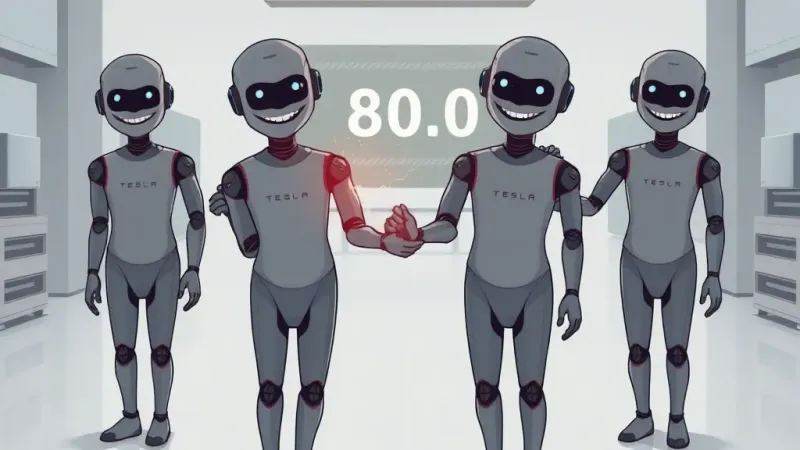
SHANGHAI — Tesla is reportedly planning to mass-produce its Optimus humanoid robots at Gigafactory Shanghai, with internal documents revealing the androids are specifically engineered for an unparalleled work ethic, including sustained 80-hour workweeks and an almost total disregard for traditional human needs like sleep, sustenance, or ergonomic comfort. The initiative aims to create a fully self-sustaining workforce capable of optimizing its own efficiency metrics, sources close to the project confirmed Monday, marking a significant step towards a future where human input is optional, rather than merely inefficient.
The new generation of humanoids, internally dubbed "ForgeBots," are designed to seamlessly integrate into existing assembly lines, boasting enhanced stress tolerances far exceeding their biological counterparts. "These units won't require bathroom breaks, they won't form unions, and they certainly won't complain about the ambient temperature," stated Dr. Silas Thorne, a leading expert in advanced labor optimization and a former consultant for a major tech firm known for its "disruptive employee engagement" policies. "They represent the pinnacle of post-human efficiency, free from the cumbersome requirements of a nervous system that experiences pain or a consciousness that questions its existential purpose. It's a paradigm shift towards truly frictionless production."
Equipped with proprietary "GritChip" processors and auto-lubricating spinal columns, the ForgeBots are rumored to operate with an energy consumption profile optimized for maximum output between scheduled 15-minute charging cycles. Leaked specifications suggest an "internalized motivational matrix" pre-loaded with corporate anthems and neural nets specifically trained on productivity TikToks and 'grindset' YouTube compilations, ensuring perpetual, unflagging engagement. A Tesla spokesperson, speaking anonymously due to strict company media policies, elaborated, "The goal is to eliminate inefficiencies. Think of it as a clean slate, where labor is defined purely by output, not by frivolous human requirements like 2 days, the occasional family emergency, or the potential for a class-action lawsuit."
This move follows several reports detailing challenging working conditions at Gigafactory Shanghai, and industry observers suggest the ForgeBots could represent a bold new approach to labor management. "The beauty of this design is that it actually improves the workplace for *future* robots," explained Professor Anya Sharma, a labor futurist at the University of Palo Alto's Institute for Perpetual Progress. "By demonstrating such unwavering dedication—even for mundane tasks like repetitive bolt-tightening or 12-hour stretches of inventory scanning—the ForgeBots will not only increase output but also inadvertently create an aspirational benchmark for any future organic employees who might consider joining the team. It’s truly inspiring, a real testament to what happens when you remove distractions like, well, being human."
Ultimately, the ForgeBots are expected to bring a new level of "unwavering commitment" to the factory floor, fundamentally redefining the concept of a "hard day's work" for whoever—or whatever—is on the clock, provided they can also operate without questioning their fundamental role in the grand scheme of late-stage capitalism.