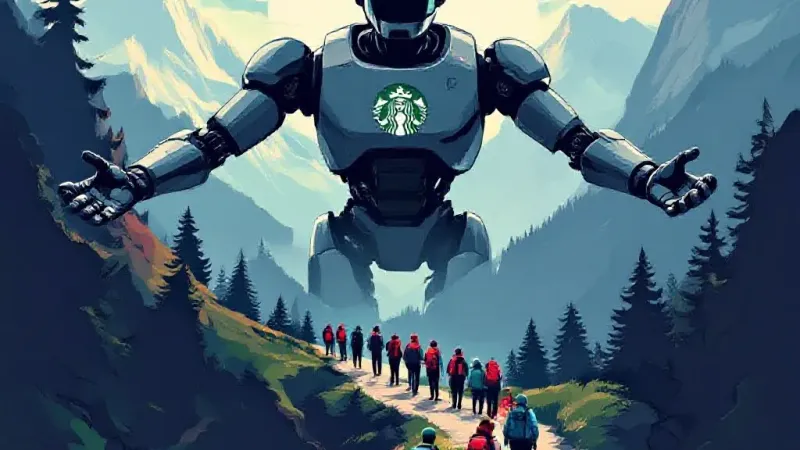
Seattle, WA – A new artificial intelligence initiative, "Trailblazer Connect," has launched a revolutionary path-finding algorithm designed to enhance the outdoor experience by seamlessly guiding hikers, campers, and nature-walkers directly to the nearest Starbucks location. Developed by Geo-Optimal Dynamics, the system aims to integrate the "serene benefits of wilderness exposure with the essential comfort of a familiar, branded caffeine experience."
Utilizing proprietary satellite imagery, real-time footfall analytics, and a predictive model of human thirst based on elevation gain, Trailblazer Connect ensures no outdoor adventure is complete without a perfectly steamed oat milk latte. "For too long, the wilderness has been a wild west of unfulfilled cravings, a vast, untamed space where one's need for a Pumpkin Spice Latte was left entirely to chance," stated Dr. Chad 'Forest' McMillan, CEO of Geo-Optimal Dynamics, from a custom-built treehouse office outfitted with Starlink internet. "Our data shows a significant correlation between optimal oxygen intake and immediate access to a mobile-order-ready drive-thru. We're not just guiding paths; we're guiding wellness and maximizing comfort per stride."
The algorithm, which syncs with popular fitness trackers and smartwatches, monitors electrolyte levels, perceived exertion, and even subconscious caffeine-craving biomarkers, instantly re-routing users if a new, closer Starbucks outpost is detected. "Why 'unplug' when you can optimally 'recharge' with premium, ethically sourced coffee?" asked lead data scientist Anya Sharma. Early beta testers reported a 37% increase in "post-hike content sharing" and a staggering 58% reduction in "wilderness-induced thirst confusion," noting a profound sense of "controlled spontaneity." One satisfied user, Brenda from Scottsdale, noted, "I used to wander aimlessly for hours, sometimes even having to drink water from my Nalgene. Now, I know exactly how many steps it is to my venti iced caramel macchiato, no matter where I am in the Redwoods. It's like nature, but better."
Critics, primarily "Luddite naturalists" and "wilderness purists," argued that the system detracts from the solitude and self-reliance inherent in outdoor activities. However, Geo-Optimal Dynamics quickly dismissed these concerns, emphasizing the economic benefits. "Think of the synergistic opportunities," Dr. McMillan retorted. "Local Starbucks branches are seeing unprecedented foot traffic. We're revitalizing rural economies, one Frappuccino at a time. This isn't just technology; it's community." The company is already developing "Recliner Trek," an in-home VR version that lets users virtually hike to the nearest Starbucks without leaving their couch.
As the sun sets on another perfectly optimized wilderness excursion, users can reflect on the profound beauty of nature, knowing that their consumer choices have been expertly curated, and their credit card data is already en route to corporate for targeted ads, ensuring future "enhanced experiences."