
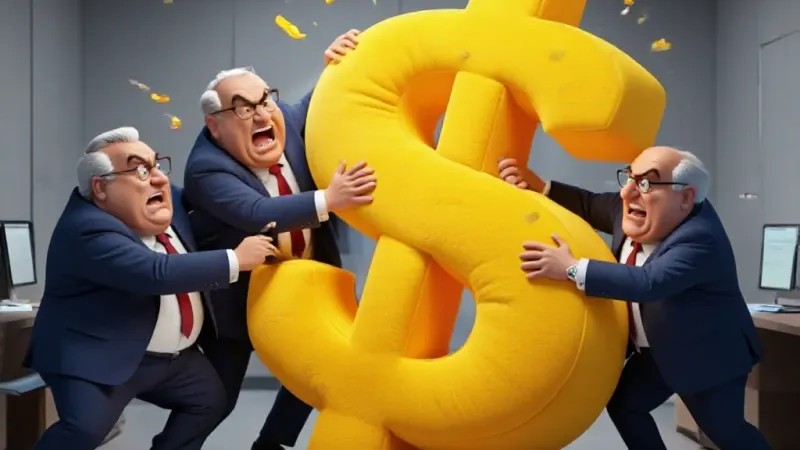
WASHINGTON D.C. — The Federal Reserve moved swiftly today to temper widespread economic exuberance, raising key interest rates after new data suggested a dangerous uptick in the general population’s ability to afford basic necessities. Treasury yields soared in response, indicating traders’ relief that the economy might finally be put back in its place before ordinary citizens started feeling too comfortable.
"We simply cannot tolerate a situation where the average American no longer experiences a low-level, pervasive financial dread," stated Jerome Powell, Federal Reserve Chair, in an emergency press conference held entirely in a cold sweat. "Our models show a terrifying scenario where single-income households could potentially save for a down payment *and* still treat themselves to avocado toast. This level of unbridled optimism is simply unsustainable for the delicate balance of capital markets." He reportedly wiped his brow with a silk handkerchief before adjusting his monocle.
Analysts universally lauded the Fed's decisive action, agreeing that such unchecked optimism was a systemic risk. Reports of individuals daring to consider leaving unsatisfying jobs, contemplating minor home improvements that weren't strictly necessary, and even *gasp* having hobbies that didn't directly generate side hustle income had begun to surface across various economic indicators. This burgeoning threat of a population not constantly on the brink of financial collapse risked dismantling the carefully constructed ecosystem of low-wage labor, high-interest debt, and aspirational consumption that underpins significant portions of the nation's GDP, particularly in the lucrative 'credit repair' and 'gig economy' sectors.
Dr. Evelyn Thorne, director of the Institute for Managed Aspiration and Debt Avoidance Studies, warned that an unchecked "consumer comfort index" could lead to societal breakdown. "When people aren't constantly worried about next month's bills, they start thinking about things like 'fair wages' or 'work-life balance,' which are simply disruptive to shareholder value," Dr. Thorne explained, adjusting her ergonomic desk chair from inside her fully paid-off, solar-powered luxury bunker. "Our research indicates a direct correlation between widespread financial ease and a dangerous dip in corporate profit margins. It's a simple feedback loop: the less stressed people are, the less willing they are to tolerate exploitative labor practices."
The Fed's actions are expected to ensure that while the economy remains "strong" on paper, the strength is primarily concentrated where it belongs: in the portfolios of those who never had to worry about an "overheating" economy in the first place.