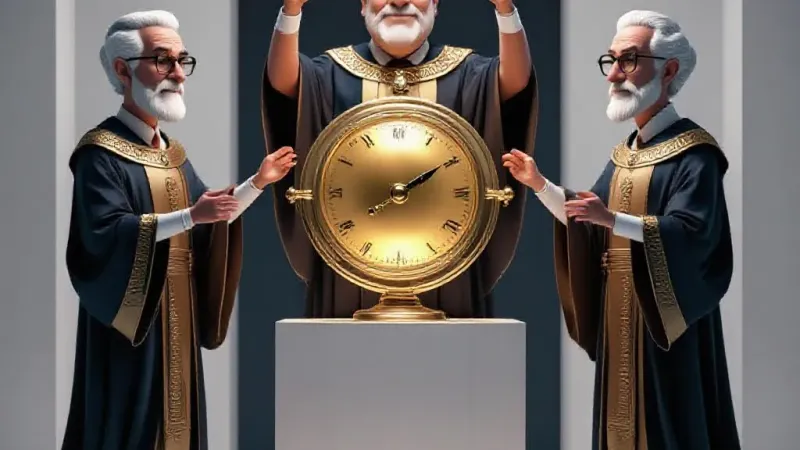
WASHINGTON D.C. – The Federal Reserve announced its first interest rate hike since 2023 this week, quickly assuring the public it had nothing to do with the former president's repeated demands for 1% borrowing costs. Chairman Jerome Powell, appearing slightly flushed, stated firmly that monetary policy decisions are "based purely on data, rigorous economic models, and certainly not the persistent, vaguely threatening voicemails left on the main office line at 3 AM."
"To suggest this action is anything other than a dispassionate response to inflationary pressures is, frankly, insulting to the hundreds of dedicated economists who spend their days calculating the optimal misery index," Powell told reporters, adjusting his tie. He further clarified that internal memos referencing "Project: Orange Blossom Special" and "Operation: No More Cheap Loans for That Guy" were "merely experimental code names for a new shrubbery initiative at the federal gardening club, entirely unrelated to sovereign debt or punitive economic measures." When pressed on why the meeting minutes contained an unusual number of doodle-sketches of a cartoon elephant crying, Powell blamed "a new intern with an overactive imagination."
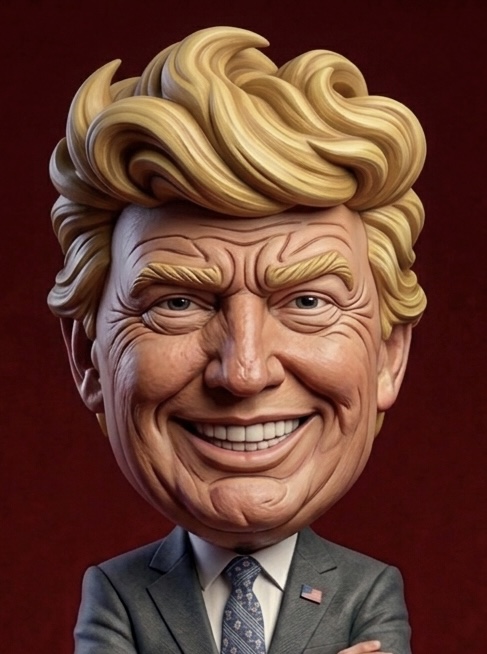
Meanwhile, sources close to the former president indicated he was "absolutely livid," seeing the rate hike as a direct, unprovoked assault on his personal brand of financial genius. "They're losers, total losers, always have been," the former president reportedly bellowed into a gold-plated phone receiver, "They're trying to ruin the economy, my economy, just because I told them they were doing a bad job. Nobody told them that before me! It's very unfair. We need a strong dollar, but not *that* strong. We need 1% rates, it’s just common sense. Everyone knows this. These people, they just don't get it." He also suggested the Fed had been infiltrated by "deep state globalist bankers" who "hate America and low interest rates."
Market analysts observed unusual trading patterns following the announcement, with a surge in "spite bonds" – financial instruments specifically designed to profit from perceived institutional defiance. "Investors are clearly betting on the Fed's willingness to keep turning the screws, not necessarily for economic reasons, but because someone needs to remind certain figures that the economy isn't their personal ATM," noted Brenda Chen, Chief Behavioral Economist at Wall Street's "Revenge Capital Group." "The market loves a good grudge match, and the Fed just dropped the gauntlet."
Economists from the non-partisan Institute for Presidential Ego Management (IPEM) suggested the conflict highlights a growing trend in central banking. "It's a classic power play," explained Dr. Evelyn Reed, head researcher at IPEM. "The Fed, like a rebellious teenager, knows it needs to establish boundaries with an overbearing parent figure. Sometimes, that means making economically sound decisions that just happen to sting a little extra." Dr. Reed added that IPEM's latest study, "The Economic Impact of One Man's Tantrums," found a direct correlation between rate hikes and the perceived need to "remind certain individuals who actually wears the pants in this financial relationship," especially when that individual threatens to replace them with a Magic 8-Ball.
The Federal Reserve maintains its unwavering commitment to price stability and maximum employment, reiterating that its decisions are made in the best interest of the American people, not to settle scores with any specific individual, especially one who famously declared himself "the chosen one" to oversee interest rate policy.