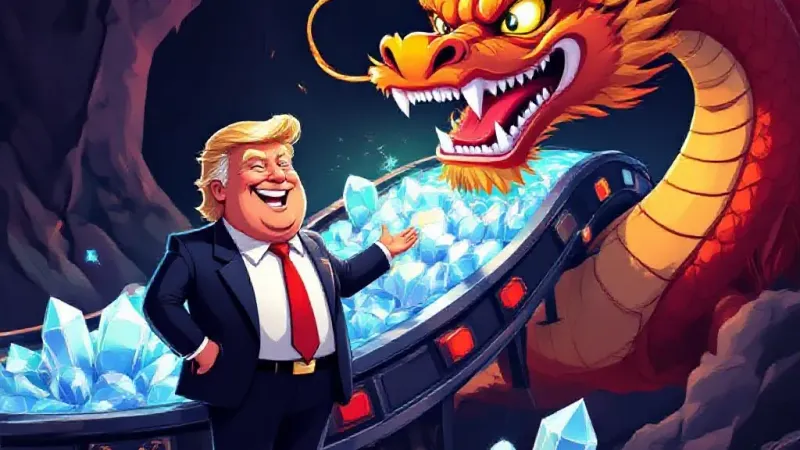
MOUNTAIN PASS, Calif. – Rare earth minerals, extracted from U.S. soil with significant backing from the previous administration’s push for a robust domestic supply chain, are now primarily heading overseas to manufacturers in Japan and South Korea. This strategic re-routing comes as domestic demand for the critical elements, vital for everything from advanced weaponry to electric vehicles, has been "slow to emerge" within the United States itself. The initiative, once touted as a cornerstone of American economic independence and national security, has instead ensured that America’s raw materials continue to fuel the technological ambitions of nations with more functional manufacturing sectors, proving that "America First" can also mean "America's Raw Materials First... to leave America."
"Look, we’re miners, not miracle workers," stated Rex "The Digger" O’Malley, CEO of American Patriot Metals LLC, speaking from a newly-erected banner proclaiming "Minerals Made in America!" "We pull this stuff out of the ground, and if nobody in Peoria or Pittsburgh is ready to turn it into an iPhone, an electric vehicle battery, or a hypersonic missile guidance system, then we’re gonna sell it to someone who is. This isn't charity; it's capitalism. We delivered the goods, literally. What America *does* with its goods is America’s problem." O’Malley added that his company had received numerous inquiries from US-based PowerPoint designers and consultants, but few from actual factory operators with purchase orders.
A former senior official from the Trump administration, speaking anonymously because he is now on the board of three separate mineral-consulting firms, explained the move was always part of a "broader strategic vision." "The goal was never to hoard; it was to *control access*," he clarified, wiping a bead of sweat from his brow during a video call from his yacht moored off St. Barts. "And by ensuring our allies have reliable access to our—I mean, *the*—rare earths, we strengthen the global democratic alliance against, you know, the bad guys. It's a subtle play. Very subtle. It just looks like we’re shipping all our stuff overseas." He declined to elaborate on what the "bad guys" might be shipping or why US-made components couldn't serve the same "democratic alliance."
Analysts suggest the delay in domestic demand stems from a crippling lack of advanced processing facilities and high-tech manufacturing plants in the U.S., a problem conveniently overlooked by politicians more interested in groundbreaking ceremonies and photo ops than investing in actual infrastructure. The American "domestic supply chain" seems to begin with digging dirt and end with a shipping container sailing toward Asia. For now, the U.S. remains a world leader in raw material extraction and subsequent global distribution, bypassing the inconvenient middle steps of actually making things.
This ensures America’s rare earths are perfectly positioned to empower the next generation of foreign-made drones, renewable energy tech, and consumer electronics, ready for purchase by U.S. citizens who, at least, can claim the dirt came from their own backyard.