
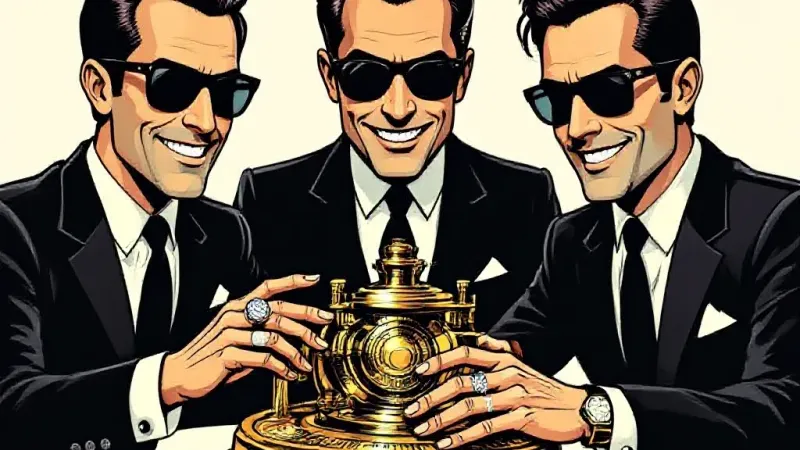
HOLLYWOOD — Music industry titans issued statements today confirming the passing of prolific ‘70s songwriter and producer Brian Potter at 87, quickly pivoting to reassure shareholders that his extensive catalog of hits remains a robust and revenue-generating asset. Potter, who co-produced and co-wrote chart-toppers for artists like Glen Campbell, Player, Tavares, and the Four Tops, reportedly died peacefully, a fact described by one industry insider as “optimal for ensuring smooth transitional rights management and minimizing potential disruption to ongoing revenue streams.”
“While we extend our deepest sympathies to Mr. Potter’s family, our primary concern is the continued health and viability of the intellectual property he so meticulously crafted,” stated a spokesperson for a major global music group, speaking on background. “His contribution to the '70s sound, particularly the indelible earworms that dominate classic rock radio, elevator music loops, and particularly lucrative sync licensing deals for everything from detergent commercials to aspirational biopics, ensures a steady stream of passive income for the foreseeable future. We fully expect hits like ‘Rhinestone Cowboy’ and ‘Baby Come Back’ to perform strongly on all streaming platforms, airport lounge playlists, and movie trailer placements well into the next fiscal quarter, if not beyond, thereby affirming the long-term investment value.”
Analysts were quick to point out that Potter’s death presents no immediate threat to the underlying value of the rights, which were mostly acquired decades ago. Instead, it streamlines the royalty payment structure, eliminating the need for complex, often sentimental, negotiations with a living creator. “Think of it as asset optimization through life-cycle management,” explained Dr. Anya Sharma, Head of Post-Mortem Monetization Studies at the Institute for Perpetual Royalties. “The creative process is inherently messy; the inheritance process, while sensitive to optics, is ultimately about clarity and continuity. Mr. Potter’s extensive and well-documented publishing credits mean a predictable, hassle-free dividend for our investors, a clean break from the unpredictable whims of a human being.”
Sources close to the labels indicated that teams are already exploring new avenues for maximizing the catalog's utility. This includes potential AI-generated covers featuring synthesized voices that evoke the era without infringing on artist likeness rights, immersive metaverse concert experiences with digital avatars of the original performers, and even a new line of '70s-themed scented candles inspired by his most enduring, legally protected tracks. The overriding sentiment across the industry seems to be one of quiet satisfaction that a significant, revenue-generating "content factory" has finally settled its affairs in a manner maximally beneficial to all corporate stakeholders.
His passing serves as a stark reminder that true immortality lies not in artistic legacy, but in robust, well-structured royalty agreements.