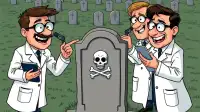

A groundbreaking new study has definitively confirmed that a common, decades-old transplant medication, recently found to significantly delay the onset of type 1 diabetes in children, possesses absolutely no discernible luxury branding potential. The findings, published this week, have sent shockwaves through the pharmaceutical industry, which had reportedly just begun drafting internal memos on how to best ignore the drug’s existence.
The medication, known generically as tacrolimus, has been available for decades at a cost typically measured in spare change. Its efficacy in preserving insulin-producing cells in newly diagnosed children with type 1 diabetes represents a significant medical breakthrough, posing an existential threat to the industry's preferred model of developing novel, patented compounds that cost more than a small car.
“While we applaud any advancement in patient care, we must critically evaluate whether a treatment offers a sustainable revenue stream for our shareholders,” stated Dr. Evelyn Thorne, Chief Profitability Officer at OmniPharm Inc., during an emergency investor call. “A drug that’s been off-patent since the Reagan administration simply does not align with our Q3 growth projections. It has, to be frank, a profoundly negative ROI profile, and its market disruption potential is primarily focused on our projected profits, which is, frankly, counterproductive disruption.”
Healthcare analysts confirm that the drug’s low cost and widespread availability make it a non-starter for the modern pharmaceutical market. “There's no scarcity, no proprietary delivery mechanism, no complex manufacturing process to justify a 5000% markup,” explained market strategist Bartholomew 'Bart' Kincaid of WealthMetrics Global. “It just… works. And it’s cheap. This is precisely the kind of 'innovation' that sends the wrong message to our venture capital partners.” Kincaid suggested that if the drug could be repackaged in a proprietary, artisanal glass vial and administered via a Bluetooth-enabled smart device, its value might be salvageable.
Industry insiders are now reportedly exploring options to mitigate the damage, including commissioning studies to prove that the drug causes excessive happiness, thus requiring an expensive counter-medication. Others are pushing for legislation that would mandate a 'historic value tax' on any drug found to be effective and affordable, ensuring that its low price doesn't undermine the perception of value in more expensive treatments.
Parents and medical professionals worldwide expressed cautious optimism for patients, while pharmaceutical executives scheduled a series of high-level meetings to discuss rebranding their entire R&D department as a 'luxury wellness experience provider' to avoid similar incidents in the future.