
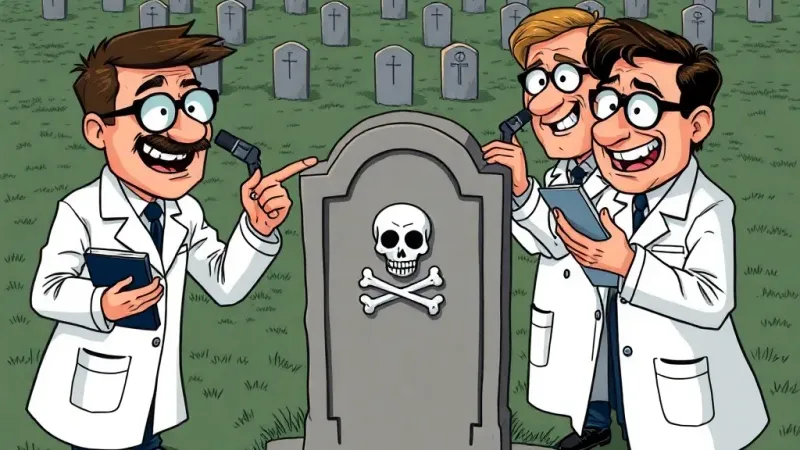
BRUSSELS – In a move hailed by the global scientific community as "boldly proactive," researchers have commenced an in-depth structural analysis of the Borna disease virus 1 (BoDV-1), a pathogen known for its near 100% fatality rate in humans. The virus, which causes severe and almost invariably fatal encephalitis, has been observed in sporadic human cases for decades, yet comprehensive studies into its basic mechanisms are only now reaching a "critical phase," according to a new report from the World Health Organization's Division of Retrospective Pathogen Concern.
"For years, BoDV-1 remained a perplexing footnote in virology textbooks – a 'super deadly, but incredibly rare' curiosity," stated Dr. Alistair Finch, head of the Global Institute for Post-Mortem Pathogen Prioritization. "But after the sixth fatal case in Bavaria last year, it became abundantly clear that a virus which kills every single person it infects might warrant a closer look before it decides to become less 'rare.' Our new understanding of its nucleoprotein-RNA complex is truly revolutionary, in the sense that we are now understanding something we probably should have understood a long time ago." Dr. Finch emphasized that this groundbreaking study, published in *The Journal of Extremely Urgent Discoveries*, marks a paradigm shift from merely documenting human deaths to actively investigating why they occur.
Critics, largely ignored until recently, have long pointed out that BoDV-1 shares genomic characteristics with other notorious killers like Ebola and rabies, making its long-standing status as a "low priority" pathogen increasingly untenable. Funding for the BoDV-1 initiative, previously earmarked for projects such as "The Correlation Between Pet Rock Ownership and National GDP" and "Why Billionaires Need More Tax Breaks," was only reallocated after a parliamentary committee questioned why a virus with a perfect killing record wasn't receiving the same scientific scrutiny as, for instance, seasonal sniffles. "It's a testament to human resilience that we can maintain a sense of calm even when a literally unstoppable, 100% lethal brain-eater is quietly circulating," commented Dr. Finch, adjusting his lab coat. "We're not panicking, we're just finally getting around to identifying its internal organs."
The research aims to pinpoint the exact structural elements that allow BoDV-1 to effectively "turn off" human brains, a process so efficient it reportedly makes traditional anti-viral approaches look "quaintly optimistic." Scientists hope this newfound knowledge will eventually lead to, at minimum, a more sophisticated autopsy report, or at best, an urgent memo suggesting people avoid direct contact with infected shrews. The current advice remains unchanged: if you suspect you have Borna disease, please inform a loved one to plan your eulogy immediately, as medical intervention is currently limited to comforting words and confirming your exact time of expiration.
Future research will explore if waiting until every patient dies before studying a virus offers any discernible advantage.