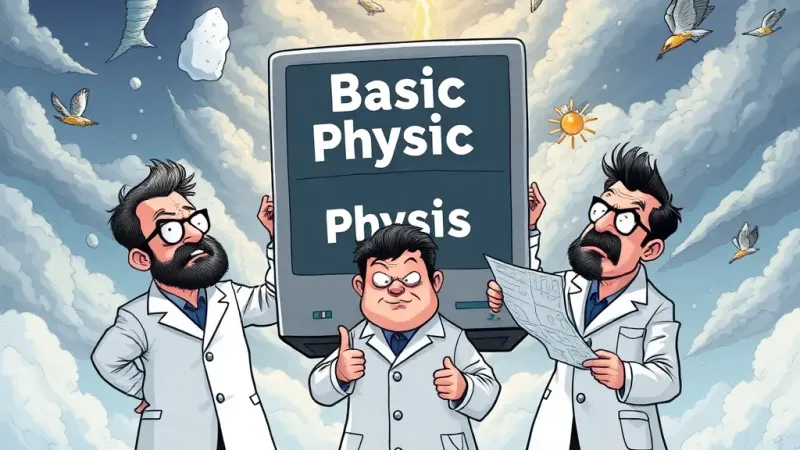
WASHINGTON D.C. — After a turbulent period marked by record extremes, baffling microclimates, and general atmospheric indecision that left meteorologists sweating through their forecasts, the nation's weather systems have reportedly settled into patterns broadly consistent with historical seasonal averages. Residents across much of the continental United States can anticipate "cooler and calmer weather" for the foreseeable future, complete with the previously anticipated phenomenon of frost-filled nights, signaling what experts are calling a "refreshing return to meteorological fundamentals."
"For too long, we've been operating in an environment of meteorological wild west, where every forecast was merely an educated guess bordering on divination," stated Dr. Quentin Temples, director of the newly established, and highly funded, National Bureau of Climatological Regularization, during a somber press briefing. "There was a palpable sense of unease, a gnawing question about whether autumn would bring anything other than a surprise heatwave, a sudden, unseasonal blizzard, or an entire week of inexplicable drizzle followed by a localized tornado. We are proud to report that, following extensive monitoring, the application of established physical constants, and what we refer to internally as 'gentle nudges to the jet stream,' the earth has, in fact, continued its axial tilt and orbital path as per design specifications."
The re-emergence of predictable cold fronts and crisp, clear evenings is expected to have significant ripple effects across various sectors. The home goods industry, for instance, is already forecasting a surge in demand for seasonal affective disorder lamps and oversized knitwear, items previously considered niche until the recent "atmospheric free-for-all" rendered them essential year-round survival gear. Farmers, in particular, are reportedly breathing a collective sigh of relief, no longer forced to explain why their pumpkins harvested in January were simultaneously sun-scorched and flash-frozen. Even the outdoor recreation market anticipates a boom in activities that actually correspond to the season advertised.
Analysts at Weatherlyne Financial predict that this era of "Climate-as-Expected" will usher in an unprecedented period of stable long-range planning, potentially reducing the national anxiety index by several points. "We can finally, and without irony, discuss 'winterizing' our homes and planning specific holiday activations," noted market strategist Brenda Frost, "rather than speculating if December will require both snow tires and a parasol, or if July will feature a freak hailstorm. It's a game-changer for everything from the seasonal decor sector to insurance premiums, which can now be calculated based on, you know, reality." The Bureau of Climatological Regularization declined to comment on the exact methodologies employed to achieve this newfound predictability, citing ongoing proprietary atmospheric modeling protocols and the general reluctance of fundamental forces to be micromanaged without adequate federal oversight.
Meanwhile, lifestyle influencers whose entire brand revolved around "mastering the unexpected weather challenge" are reportedly facing an identity crisis. "My entire 'Winter Beach Day Hacks' content strategy is now obsolete," lamented Skye 'Sun-or-Snow' Johnson in a tearful Instagram story. "Who even wants to see someone layering cashmere under a swimsuit when it's just, like, *actually cold*?" For many, the return to normal has brought a strange sense of loss.
Citizens are now reportedly grappling with the existential question of what to complain about when the weather is simply... normal.