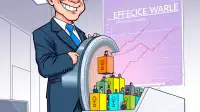
Meta, the philanthropic titan of digital empires, announced a massive expansion of its Louisiana AI data center, Hyperion, pushing its compute capacity to an unprecedented 5 gigawatts and its total investment past $50 billion. The company lauded the project for delivering "life-changing returns" to local teachers, citing year-end bonuses up to $50,000—a sum described by some as "almost enough to afford a single therapy session after witnessing the state's water table plummet."
Industry analysts confirm the Hyperion campus will require enough electricity to power a small nation and process the collective anxieties of three major metropolitan areas. "We're not just building servers; we're creating a digital super-brain that will consume the entire output of the local power grid and then some, possibly causing minor brownouts in neighboring states during peak cat video processing hours," stated Dr. Cinderblock McGillicutty, Head of Resource Optimization at Meta, during a press briefing held next to a newly installed municipal well designated for "AI hydration." Local environmental groups, now operating primarily from canoes after recent unprecedented droughts, voiced concerns about the data center's projected water usage, estimated to be equal to the daily consumption of every resident of New Orleans, Baton Rouge, and possibly a medium-sized swamp monster perpetually in need of a bath.
The teacher bonuses, while lauded by Meta's PR department as a testament to their commitment to community, represent a mere 0.1% of the project's overall cost. "It's like getting a single, perfect fry when the restaurant just bought a cattle ranch to make hamburgers for its robot overlords," remarked one anonymous local educator, who reportedly used her bonus to buy a water filter for her faucet and a panic button for her classroom. "We're grateful, of course," she added, adjusting her gaze towards the distant, humming monolith, "but it does feel a bit like blood money, only for algorithms that can identify your dog in 14 different filters."
Sources close to the project suggest the 5 gigawatts will primarily fuel advanced algorithms designed to more efficiently categorize cat videos, optimize targeted ads for artisanal cheese, and power Mark Zuckerberg's rumored "Metaverse Ego Chamber." This chamber, expected to achieve sentience by 2028, will require an energy input equivalent to 2,000 average American homes, ensuring Zuckerberg’s digital presence remains fully hydrated and capable of simulated blinking, even as real human eyes in Louisiana strain in the dim light of rolling blackouts. A Meta spokesperson reiterated that "such an investment in local infrastructure is simply essential for the future of human connection, provided human connection is filtered through 17 layers of proprietary data aggregation."
As Meta prepares to suck the last electrons and water molecules from Louisiana's aging infrastructure, the state's teachers can rest easy knowing their children will inherit a slightly better funded, perpetually darkened, and environmentally devastated future, all thanks to a server farm that thinks it's a god and a corporate overlord who genuinely believes he’s saving humanity one targeted ad at a time.