
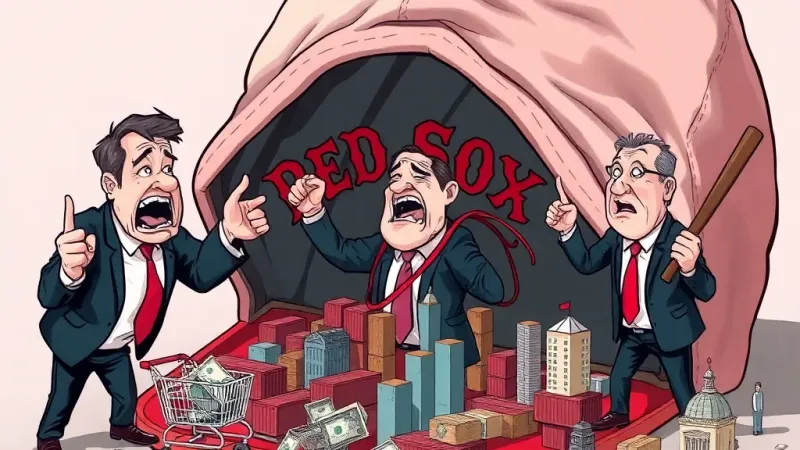
WASHINGTON D.C. — A palpable sense of dread gripped financial markets and everyday Americans alike this week as ESPN’s 2 MLB power rankings revealed the Boston Red Sox tumbling several spots, sending shockwaves through an already fragile global 2. Analysts are openly questioning whether the unexpected dip, which saw the team fall to 22nd overall, could be the black swan event that finally triggers a full-blown recession.
“We’ve been monitoring the correlation between early-season 2 fluctuations and macroeconomic stability for years, and the data is unequivocal,” stated Dr. Evelyn Reed, chief behavioral economist at the Institute for Predictive Punditry, during an emergency press conference. “A drop like the Red Sox experienced, especially after an optimistic preseason, creates a profound vacuum of speculative investment. We’re already seeing commodity prices respond. It’s a direct causality, almost as if the collective emotional state of a fan base is somehow tied to the Dow Jones Industrial Average.” Dr. Reed elaborated that initial projections indicate a potential 0.7% decrease in Q2 GDP, directly attributable to the Red Sox's performance anxiety translating into reduced consumer spending on non-essential goods, like, ironically, 2 merchandise.
The cascading effects are not limited to Wall Street. Reports from several major shipping ports indicate a slowdown in container traffic, with sources attributing the reduced activity to a general lack of enthusiasm for global commerce following the Red Sox’s perceived diminished championship prospects. Families are reportedly reconsidering large purchases, and a prominent furniture chain has already issued a profit warning, citing “unforeseen drops in regional enthusiasm” as a primary factor. Meanwhile, the surprising ascent of teams like the Milwaukee Brewers and Pittsburgh Pirates in the rankings has done little to assuage fears, with experts noting that gains from 'unexpected contenders' rarely offset the systemic shock of a major market team’s decline.
“It’s really a shame,” commented Senator Mitchum O’Connell (R-ID), speaking from a hastily arranged bipartisan caucus meeting on economic stability. “We passed infrastructure bills, we debated inflation, we even considered a national iced coffee mandate. But nobody—and I mean nobody—predicted that the integrity of our entire financial system would hinge on the bullpen’s ERA after three weeks. You can’t legislate against existential despair when your favorite team is underperforming.” The Senator added that Congress is now exploring a legislative package that would incentivize stable team performance through federal tax credits, or possibly a national program to artificially inflate local sports enthusiasm.
Cultural critics are also weighing in, noting the rankings’ ability to expose the raw, unvarnished truth of America’s emotional investment. “We pretend we care about climate change or geopolitical tensions, but just watch the national discourse after a particularly brutal ‘power rankings’ update,” observed media theorist Dr. Lena Hansen. “It’s clear where the true anxieties lie. We are a nation whose collective mood is far more susceptible to the algorithmic whims of sports journalists than any actual policy decision.”
Experts agree that without an immediate, dramatic turnaround from the Red Sox, or perhaps a significant re-evaluation of the methodology behind arbitrary weekly rankings, the nation faces an uncertain economic future, possibly until October.