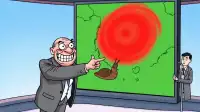

Richmond, VA – Local affiliate WWBT today activated its highly publicized "First Alert Weather Day" designation for Wednesday, citing the "unprecedented likelihood of actual weather occurring." The announcement, broadcast hourly with urgent graphics and dramatic sound effects, warned residents to brace for a phenomenon experts are calling "normal atmospheric events." Predicted conditions include a 70% chance of temperatures hovering within seasonal norms, mild breezes, and the faint possibility of precipitation in liquid form.
“Our mission is preparedness,” stated Brenda 'Weather Woman' Johnson, WWBT's newly appointed Chief Atmospheric Alarmist, during an emergency segment featuring a meteorologist standing in front of a rapidly swirling graphic of a single cloud. "In an era of dwindling attention spans and pervasive apathy, we realized we weren't just reporting the weather; we were *curating* an experience. And that experience needs to involve a baseline level of low-grade anxiety, lest our viewers switch to TikTok for updates on whether their neighbor’s cat is plotting world domination."
According to an internal memo obtained by Hambry, the station’s new “Pre-Pre-Pre-Alert” system, powered by a proprietary AI named “Cassandra 2.0,” now monitors for potential dust motes, rogue pollen grains, and the existential dread of a perfectly clear sky. The memo detailed metrics for "Viewer Engagement via Elevated Anticipation" and "Ad Impressions from Sky-Is-Falling Graphics." Future "First Alert" days are anticipated for events such as "excessive sunlight," "atmospheric oxygen levels consistent with breathing," and "the statistical probability of one individual experiencing a mild headache due to barometric pressure changes."
Local resident Carol Jenkins expressed confusion. "I thought 'First Alert' was for, like, hurricanes or alien invasions. Now it's for Tuesday? My kids asked if they needed to wear their rain boots just because there might be a cloud." Station management countered that such proactive measures ensure all residents are adequately emotionally conditioned for any future inconvenience, however minor.
The move has drawn praise from media strategists who applaud the station's innovative approach to audience retention. “It’s brilliant,” commented Dr. Mortimer Flinch, head of the Institute for Aspirational Proximity Studies. “By treating every day like a potential disaster, you elevate the mundane to must-see TV. Why wait for a genuine emergency when you can manufacture perpetual low-level dread?”
Critics worry this constant vigilance could desensitize the public, leaving them utterly unprepared for the day a news station declares a "First Alert" for the actual apocalypse.