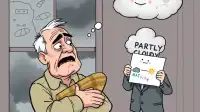
NEWS DESK — Local news stations are grappling with an unexpected and persistent crisis: a sustained period of "quiet weather." Meteorologists, long accustomed to dramatic forecasting, are reportedly struggling to fill airtime with reports of sunny skies, mild temperatures, and generally uneventful conditions, a phenomenon some are terming "dangerously boring."
"This is unprecedented," stated Dr. Celeste Harding, a media studies professor at the University of Central Kansas and author of *The Panic Button Economy: How Local News Capitalizes on Climate Anxiety*. "Our proprietary data shows a direct, unequivocal correlation between plummeting temperatures and rising ad revenue for home insulation companies. When viewers aren't being warned about an impending blizzard, a record-breaking heatwave, or a sudden, localized microburst, they simply disengage. It's a fundamental challenge to the established panic-and-profit model that has sustained local broadcasting for decades." Internal memos, reportedly leaked from several mid-market affiliates, reveal dire projections for their "Viewer Engagement Index" (VEI), which typically spikes dramatically during any declared natural disaster or even the distant threat of one. Some stations have seen their VEI drop by as much as 37% during this period of climatic tranquility.
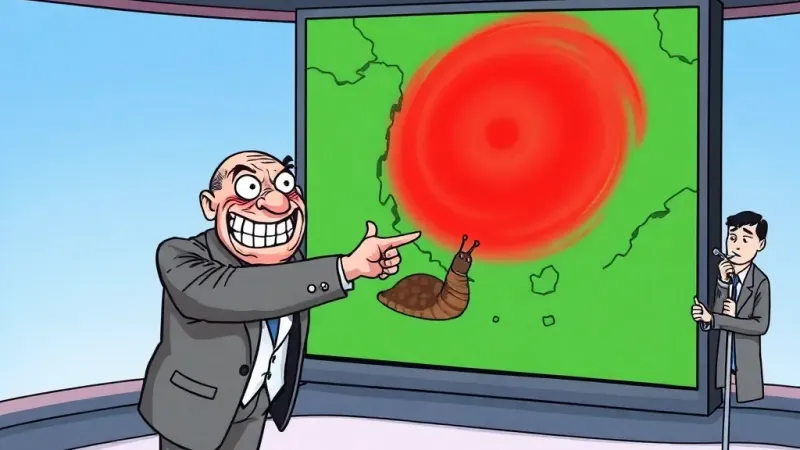
Veteran local weather anchor Chet Sterling of WBND-TV, a 30-year broadcast professional, openly confessed his team is on "crisis footing." "We've tried everything," Sterling lamented, nervously polishing his hurricane-tracking pointer. "Segments on 'the subtle beauty of a gentle breeze,' 'how to optimize your sprinkler system for moderate rainfall,' even a multi-part investigative series on 'the existential dread of predictable mornings and their impact on coffee consumption.' Nothing sticks. People tune out when there isn't a named storm to track, a flash flood warning to issue, or a heat advisory to fearmonger about. Our entire ad buys are predicated on keeping people glued to the screen, worried about what's coming next, even if 'next' is just partly cloudy and 72 degrees."
The prolonged drought of dramatic weather has forced increasingly innovative, if desperate, solutions. One affiliate reportedly experimented with animating a single, benign cumulus cloud for a full three minutes to demonstrate its "journey across the troposphere," while another considered a live stream of a completely still weather vane, promising "uninterrupted calm." Network executives have reportedly issued directives for meteorologists to "find the peril" in pleasant conditions, leading to segments like "The Silent Threat of Unremarkable Blue Skies" and "Are You Prepared for a Day with Absolutely Nothing Happening?" Industry analysts predict a significant increase in "human interest" stories about particularly resilient garden gnomes and community bake sales if the current calm persists beyond the projected Wednesday timeline. Viewers, too, have expressed a quiet frustration, accustomed to the comforting rhythm of impending doom.
When asked about the future of weather forecasting in an era of relentless normalcy, Sterling simply stared blankly at a static radar screen, a single bead of sweat tracing a path down his brow. "Honestly," he whispered, "I really miss the tornadoes."