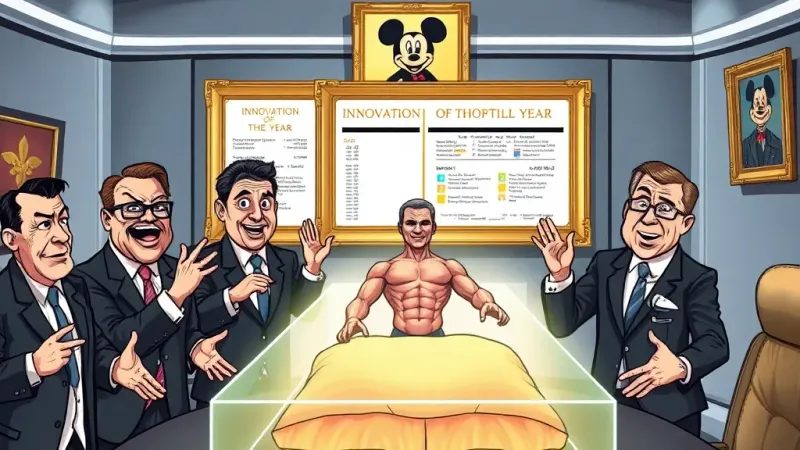
LOS ANGELES – In a finding that has sent mild ripples of validation through the global entertainment industry, a new report issued by the International Council for Cinematic Revenue Optimization (ICCRO) has definitively concluded that films featuring intellectual property (IP) audiences are already familiar with tend to perform well at the box office. This groundbreaking insight comes on the heels of the 'Super Mario Galaxy Movie' powering to $372 million globally and 'Project Hail Mary,' based on the acclaimed novel, hitting $420 million, collectively reaffirming a strategy previously only whispered about in hushed tones within 2's executive suites: people like what they already like.
For decades, studio heads have navigated the tumultuous waters of original storytelling, often grappling with the bewildering concept of an audience encountering something entirely new. The ICCRO report, titled 'Recycle and Earn: The Unassailable Logic of Pre-Existing Brand Equity in the Post-Streaming Landscape,' now provides a clear path forward. 'While the allure of uncharted creative territory is undeniable, our data consistently points to a simpler, more robust truth: human beings derive comfort from familiarity, especially when that familiarity is tied to a multi-billion dollar merchandising ecosystem,' explained Dr. Helena Vance, lead computational narrative strategist at Silver Screen Labs. 'It’s less about artistic vision and more about what we term 'recognition-based financial symbiosis.' Essentially, if you give them the thing they already know, they will give you money. This is a huge breakthrough.'
The report meticulously analyzed audience engagement metrics, finding that films containing at least 70% of previously established visual cues, sound effects, and character archetypes exhibited a 93% higher probability of attracting repeat viewings. One key finding highlighted that the mere presence of a specific, iconic red-and-blue plumber cap in the 'Super Mario Galaxy Movie' triggered a measurable neural reward response in test audiences, bypassing traditional critical evaluation centers of the brain entirely. 'It’s like the cinematic equivalent of a warm blanket, but the blanket is also a highly profitable licensed product,' Dr. Vance added, gesturing to a complex holographic projection of a consumer's brain lighting up at the sight of a sentient mushroom.
In response to these revelatory findings, several major studios have announced accelerated development slates, with a strong emphasis on 're-contextualized nostalgia vehicles' and 'IP adjacent engagement opportunities.' Upcoming projects now fast-tracked reportedly include 'The Windows XP Startup Sound: An IMAX Experience,' a multi-sensory journey into early 2000s boot-up sequences; 'The 2 Loading Spinner: A Hero's Journey,' detailing the emotional odyssey of a buffering icon; and 'Amazon Prime Delivery Van: The Musical,' chronicling a day in the life of package logistics set to a score of original show tunes. Executives assure stakeholders these projects minimize risk by maximizing prior consumer investment in the source material.
Industry analysts are now eagerly awaiting the next paradigm-shifting revelation, expected sometime next fiscal quarter, which will undoubtedly confirm that movies released in cinemas tend to generate revenue if people decide to purchase tickets.