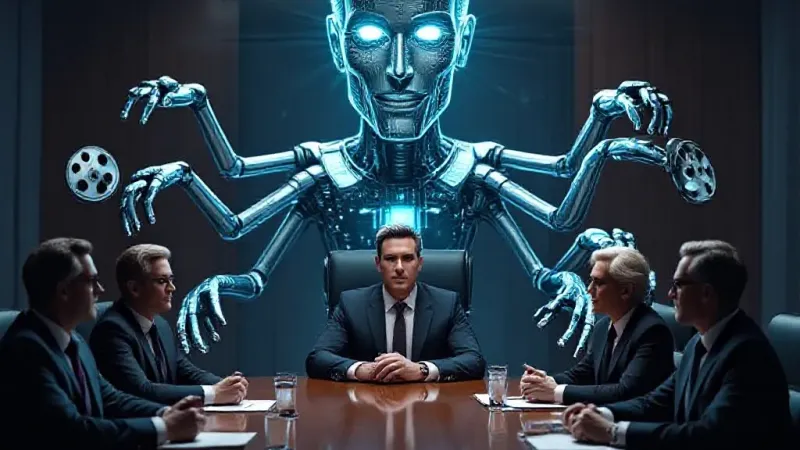
A groundbreaking new internal study conducted by an unnamed major Hollywood studio has revealed that the optimal strategy for film production moving forward involves an endless, AI-driven cycle of reboots, sequels, and prequels for existing intellectual property. The algorithm, internally dubbed "Content Harvester 3000," crunched decades of box office data, streaming metrics, and audience engagement scores, definitively concluding that original ideas are statistically inferior to simply continuing established franchises, no matter how threadbare the concept. This comes as news outlets hype upcoming horror sequels like 'Ready or Not 2: Here I Come' and 'Scream 7,' perfectly aligning with the algorithm’s bleak prognosis for creative originality.
"The numbers don't lie," stated Dr. Seraphina Byte, lead algorithmic ethicist (and former accountant) at the newly formed Institute for Iterative Content Optimization. "Our models show a direct correlation: the less original thought required for a project, the lower the risk profile, and thus, the higher the predictable return. Audience surveys indicate a comfort in familiarity, a desire to consume more of what they already know. Why innovate when you can replicate?" Dr. Byte elaborated that the algorithm specifically flagged horror as a genre with exceptionally low audience resistance to repetitive plots and ever-diminishing returns in actual scares, making it ideal for continuous, low-cost output.
Studio executives, who previously endured the burdensome task of evaluating scripts based on subjective artistic merit, expressed profound relief at the algorithm’s findings. "It's taken all the guesswork out of it," shared a senior production VP who asked to remain anonymous, citing potential backlash from the few remaining "creatives" still employed. "Now, we just feed in the release date, and Content Harvester 3000 spits out whether it should be 'Fast & Furious 28' or 'Paranormal Activity: The Elder Scrolls Crossover.' It's beautifully efficient. We're no longer in the business of storytelling; we're in the business of IP amortization."
The algorithm further suggested that audience investment in existing characters, no matter how poorly utilized in subsequent iterations, far outweighs the cost of developing new ones. Upcoming projects already greenlit under this new paradigm include 'Jurassic Park: The Retirement Home Edition,' 'Avatar 5: Still Blue, Still Long,' and a projected 'Marvel Cinematic Universe: Phase 23, Still No Iron Man.' The promise is not compelling cinema, but predictable content, churned out on a schedule determined by machine learning and optimized for the lowest common denominator of engagement.
The future of film, it seems, will not be written by visionary screenwriters, but by a predictive analytics platform determining which moldy intellectual corpse can be reanimated one more time for minimal effort and maximum profit.