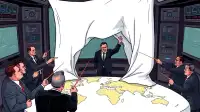
WASHINGTON D.C. — As a record-breaking heatwave threatens to shatter high-temperature records across the eastern United States, economists and industry analysts are hailing the soaring temperatures as an unprecedented boon for the personal cooling device sector. Officials from the Department of Commerce released a preliminary report Friday, forecasting significant Q3 growth driven by consumer demand for handheld fans, misting bottles, novelty ice packs, and miniature evaporative coolers. Major metropolitan areas from Boston to Atlanta are experiencing their warmest June on record, pushing consumers toward immediate, individual relief solutions.
While meteorologists issue severe heat advisories and health officials warn of increased heat-related illnesses, analysts from the National Association of Coolant-Adjacent Technologies (NACAT) focused squarely on the economic silver lining. "Every degree above average is a potential unit moved off the shelf," stated Dr. Brenda Carmichael, lead market strategist for NACAT, during a virtual press conference streamed from an air-conditioned bunker. "This isn't just a weather event; it's a profound market correction for underutilized cooling assets. We project a 150% increase in sales of anything branded 'Arctic Breeze' or 'ChillMax' by end of week, with particular spikes in the 'personal neck fan' subcategory. It’s pure supply-and-demand, driven by existential discomfort."
Political leaders were quick to echo the optimistic economic outlook. During a press conference Friday, Senator Patricia Vance (R-WI), notable for wearing a visibly sweat-stained linen suit, highlighted the positive impact on local economies. "We're seeing an inspiring surge in consumer confidence, particularly in the sub-$25 personal climate control accessories market," Vance remarked, fanning herself vigorously with a branded paper fan for a local HVAC company. "This heat isn't a problem; it's a challenge our innovative small businesses are rising to meet, one USB-powered desk fan at a time. It’s a testament to the American spirit of entrepreneurial resilience in the face of, well, *weather*." She also commended the robust growth of the bottled water and popsicle industries, citing their "crucial role in national morale."
Emergency room doctors across the affected region, however, reported a different kind of surge. Dr. Elias Thorne, head of emergency medicine at Memorial Hospital in Philadelphia, noted a dramatic increase in patients presenting with heatstroke, severe dehydration, and exacerbation of pre-existing conditions. "It's certainly keeping us busy," Thorne said, wiping sweat from his brow before adjusting his IV drip. "On the plus side, we are seeing a remarkable uptake in patients who are now acutely aware of their body's hydration needs. It's a real-world educational moment, albeit one accompanied by IV drips and ice baths, often administered after patients attempted to cool themselves with a $7.99 'Turbo-Blast Personal Cooler' purchased an hour prior." He added that the hospital's "Cooling Solutions Outreach Program" was providing free cups of tap water to anyone who could still stand in line.
Adding to the economic analysis, Dr. Kenji Tanaka, a professor of Consumer Behavior at the University of Southern New Hampshire, suggested the heatwave provides valuable insights into human psychology. "When faced with immediate, tangible discomfort, people bypass long-term solutions for instant gratification," Tanaka explained. "It's the primal 'fan-or-faint' response. We’re observing a fascinating blend of survival instinct and impulse purchasing. It’s almost beautiful, if you ignore the rising mortality rates."
Critics, meanwhile, suggested that maybe, just maybe, addressing the underlying causes of extreme weather might provide a less "exciting opportunity" for emergency services.