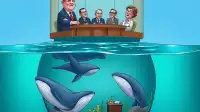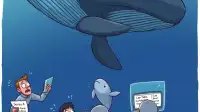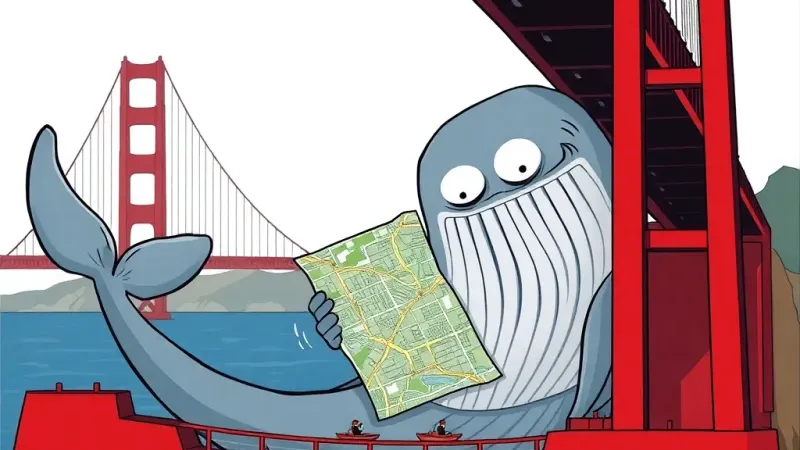
It’s a sad sight, we're told: magnificent gray whales, venturing into San Francisco Bay, only to meet their untimely end at the mercy of powerful ships or the murky, disorienting depths. And immediately, the hand-wringing starts. "Oh, climate change!" "Oh, human impact!" I say, enough with the victim-blaming of humanity. It’s time we look at the real culprits here: the whales themselves.
Let’s be brutally honest. These whales are breaking established patterns. They’re venturing into *new territory*. Nobody sent them a formal invitation to the San Francisco Bay, nor did anyone promise them a stress-free existence among our bustling maritime commerce. This isn't some pristine Arctic wilderness; it's a vibrant, economically crucial shipping lane. If you wander into the middle of a freeway, do we blame the cars for hitting you, or do we question your judgment?
This isn't a complex issue of ecological collapse; it’s a simple failure of urban adaptation. The Bay is a metropolitan waterway, a hub of activity. Ships have schedules, cargo to deliver, and responsibilities. Are we seriously expected to reroute global supply chains because a few hundred-ton creatures decided to take an unscheduled detour without checking a tide chart or, dare I say, investing in a decent GPS system? It's like moving to New York City and complaining about the noise and the crowds. Did you do your research, Mr. Whale?
The argument that climate change is pushing them here is just a convenient excuse for poor navigational skills. Are they truly so helpless that they can't find *any other* food sources? Are we to believe that every other species on Earth is somehow figuring out how to adapt, but whales get a free pass for fatal misjudgments? I submit that this is less about environmental pressure and more about an inherent lack of foresight and, frankly, a bit of entitlement. They've had millennia to figure out migration patterns; perhaps it's time they updated their internal algorithms for the 21st century.
We need to stop coddling these cetaceans with our misplaced sentimentality. What we’re witnessing isn't a tragedy; it’s a harsh lesson in personal responsibility and the unforgiving reality of natural selection. If a whale can’t navigate a moderately busy shipping lane, perhaps it wasn't meant to thrive in an increasingly complex world. Instead of deploying rescue teams, maybe we should be offering them online courses in "Advanced Urban Waterway Navigation" or "Avoiding Large Metal Objects: A Cetacean's Guide to Self-Preservation." The Bay isn't a charity. It's an ecosystem of winners and, apparently, very confused losers.