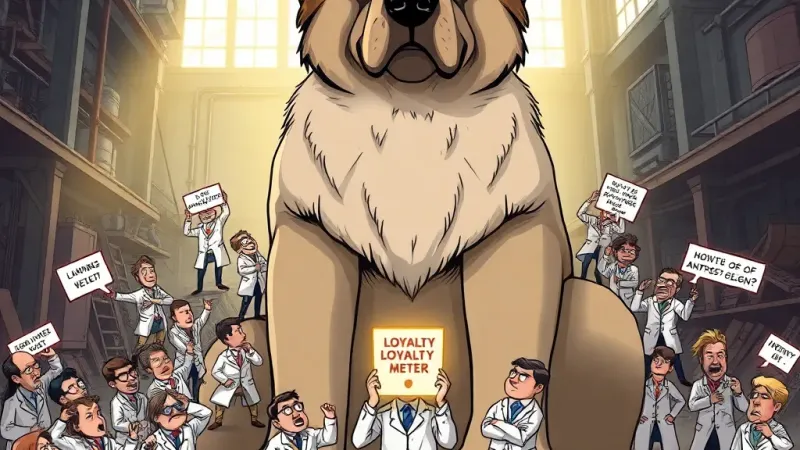
WASHINGTON D.C. — The continued, unflagging loyalty of a dog named Karma, recently observed maintaining a vigil at an abandoned factory gate, has sent shockwaves through the human behavioral science community. Researchers are struggling to categorize her steadfast devotion to her former owners, who departed months ago, labeling it a perplexing case of “legacy loyalty” – a pre-digital, almost analog commitment that appears to defy modern lifestyle trends.
“Karma’s data set presents a fascinating challenge to our current models of self-optimization,” stated Dr. Evelyn Thorne, Chair of Applied Canine Psychometrics at the Wharton School of Animal Behavior. “Her continued vigilance suggests a form of unwavering attachment that no longer aligns with the rapid iteration cycles of contemporary human existence. It’s an inefficient allocation of emotional resources, frankly, given the clear lack of return on investment.”
The unidentified former owners are presumed to have engaged in a “lifestyle pivot,” a common practice among individuals seeking to shed non-scalable attachments that don't directly contribute to their Q4 personal growth targets. A spokesperson for “Fluid Human Connections LLC,” a firm specializing in lifestyle optimization, who declined to be named citing client confidentiality, remarked, “While admirable, the dog’s persistent attachment simply wasn’t aligned with a dynamic, forward-looking personal portfolio. Modern 2, by design, must be agile, adaptable, and easily decomposable.”
Dr. Alistair Finch, co-author of *The Agile Life: A Guide to Unburdened Existence*, suggested that the pet-owner relationship has, for too long, been anchored in a static, pre-web3 paradigm of mutual obligation. “What we’re witnessing here is a natural market correction,” Finch explained via a pre-recorded holographic message. “Why sustain an emotional burden when the individual’s journey demands constant recalibration? The concept of a ‘forever home’ is a restrictive construct in an era of infinite possibilities and subscription-based belonging.”
Critics of legacy loyalty argue that such tenacious devotion could hinder societal progress by anchoring individuals to past decisions and preventing the nimble reallocation of emotional capital. Industry analysts predict a surge in “de-loyalty” programs for pets, designed to help them process and release outdated attachments, thereby facilitating a more fluid emotional landscape for their human counterparts.
Meanwhile, Karma continues her vigil, unaware that her fidelity is now considered a critical flaw in modern personal branding.