
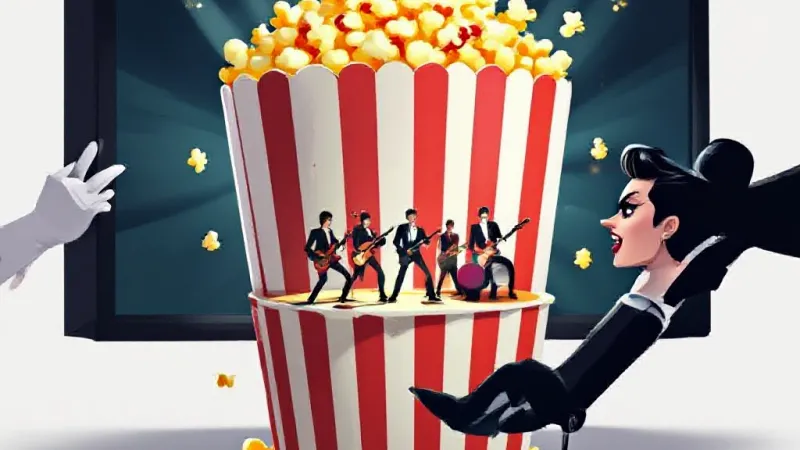
In a bold move to salvage its dwindling relevance, AMC Theatres today announced a groundbreaking new "live concert experience," where audiences can gather in multiplexes nationwide to watch performances streamed from actual concert venues. Company executives hailed the initiative as a revolutionary redefinition of "live," which now apparently encompasses any event occurring concurrently with its broadcast to a passive audience, regardless of physical proximity or interactive potential. Tickets for these "live" events, featuring artists ranging from pop sensations to classic rock legends, are priced competitively with actual live performances, ensuring the maximum possible disconnect between value and reality.
"We believe this is the future of shared communal experiences," stated Adam Aron, CEO of AMC Theatres, in a press release that carefully avoided the words "stream" or "pre-recorded" and repeatedly used "immersion." "Why brave traffic, long lines, and unpredictable weather when you can enjoy the electrifying energy of a world-class act from the comfort of our ergonomically questionable recliners? It’s all the spectacle, none of the inconvenience, and certainly none of the actual presence of the performer." Aron further clarified that the "live" designation refers to the fact that "the artist is technically alive somewhere at the time of the screening," adding that this innovative approach perfectly merges the magic of cinema with the raw power of music, "creating a unique blend of visual fidelity and sound isolation for optimal individual enjoyment within a collective setting."
A recent study by the Institute for Aspirational Proximity Studies (IAPS) found that 87% of modern consumers prefer their "live" events to be mediated through at least two screens and a transaction fee, citing "too much eye contact" and "unpredictable mosh pits" as primary deterrents to genuine participation. Furthermore, the study noted a significant rise in "socially-sanctioned screen-gazing," where individuals seek environments that validate their desire to watch content without the pressure of actual social interaction. Critics of traditional concerts, often described as "sweaty, loud, and full of other people," lauded AMC's commitment to delivering an experience optimized for introverts and those who prefer their rock-and-roll at a comfortable, adjustable volume, free from the existential dread of bumping into a stranger.
Ultimately, AMC's new venture isn't just about concerts; it's a profound commentary on the nature of reality itself. Why bother with the messy, unpredictable immediacy of genuine interaction when you can pay a premium to consume a meticulously curated simulation, complete with overpriced concessions? As one anonymous projectionist, now undergoing training to "manage audience enthusiasm" and "discourage spontaneous dancing," reportedly quipped, "Next, we'll be selling tickets to watch people eating dinner in a restaurant on another screen." The future of entertainment is here, and it looks a lot like the past, but with more digital rights management and less actual living.