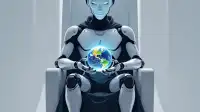

The artificial intelligence sector is buzzing with excitement over a new research breakthrough that allows for significantly faster and more accurate estimation of AI power consumption. The innovative methodology promises to give developers and data center operators unprecedented insight into the vast energy demands of their increasingly complex models, ensuring they know precisely how much electricity is being consumed, right up until the moment the grid goes offline. This development is being hailed as a critical step forward in the industry’s commitment to transparency regarding its planetary impact, a commitment that remains strictly analytical.
Previously, calculating the colossal wattage drawn by large language models and advanced neural networks was a tedious, resource-intensive process, often lagging behind the exponential growth of AI itself. Researchers from a consortium of leading tech firms and academic institutions unveiled their findings, demonstrating how their new algorithm can slash estimation times by up to 70%. "We used to spend weeks figuring out just how much energy we were burning through," explained Dr. Lena Vance, lead researcher at the newly formed Institute for Computational Entropy Quantification. "Now, we can get that number in mere days. This means our dashboards will always be up-to-date, even as our total consumption continues its aggressive climb. It’s about operational clarity, not necessarily operational change. We can tell you exactly *what* is drawing the equivalent power of a small nation, and *when*."
Industry leaders are particularly enthusiastic about the tool’s potential for enhanced "resource allocation visualization" and "efficiency reporting for stakeholder engagement." The ability to provide granular, real-time energy metrics, they argue, will be instrumental in justifying future infrastructure expansions and securing further investment from venture capitalists keen on tangible, albeit purely descriptive, environmental metrics. Major cloud providers are already integrating the technology, anticipating a new era of knowing exactly which of their thousands of servers is contributing most to the thermal load on local ecosystems.
Energy sector analysts are reportedly thrilled, predicting a surge in demand for smart grid solutions designed to handle the exact, quantifiable needs of an ever-hungrier AI ecosystem. "It’s fantastic to know the precise dimensions of the problem before it's too late to fix it," quipped one anonymous utility executive. "Because by then, we’ll have much better data on why it failed, possibly even a predictive model of the exact second the last power plant melts down. That kind of foresight is priceless, even if the solution remains elusive." The development has also spurred talks of a new global standard for AI energy reporting, aiming to ensure every kilowatt-hour contributing to ecological catastrophe is meticulously cataloged and presented in quarterly reports.
The breakthrough ensures that as the planet’s energy grids buckle under the strain, the AI powering the collapse will at least have an optimized, real-time estimate of its own rapidly escalating contribution.