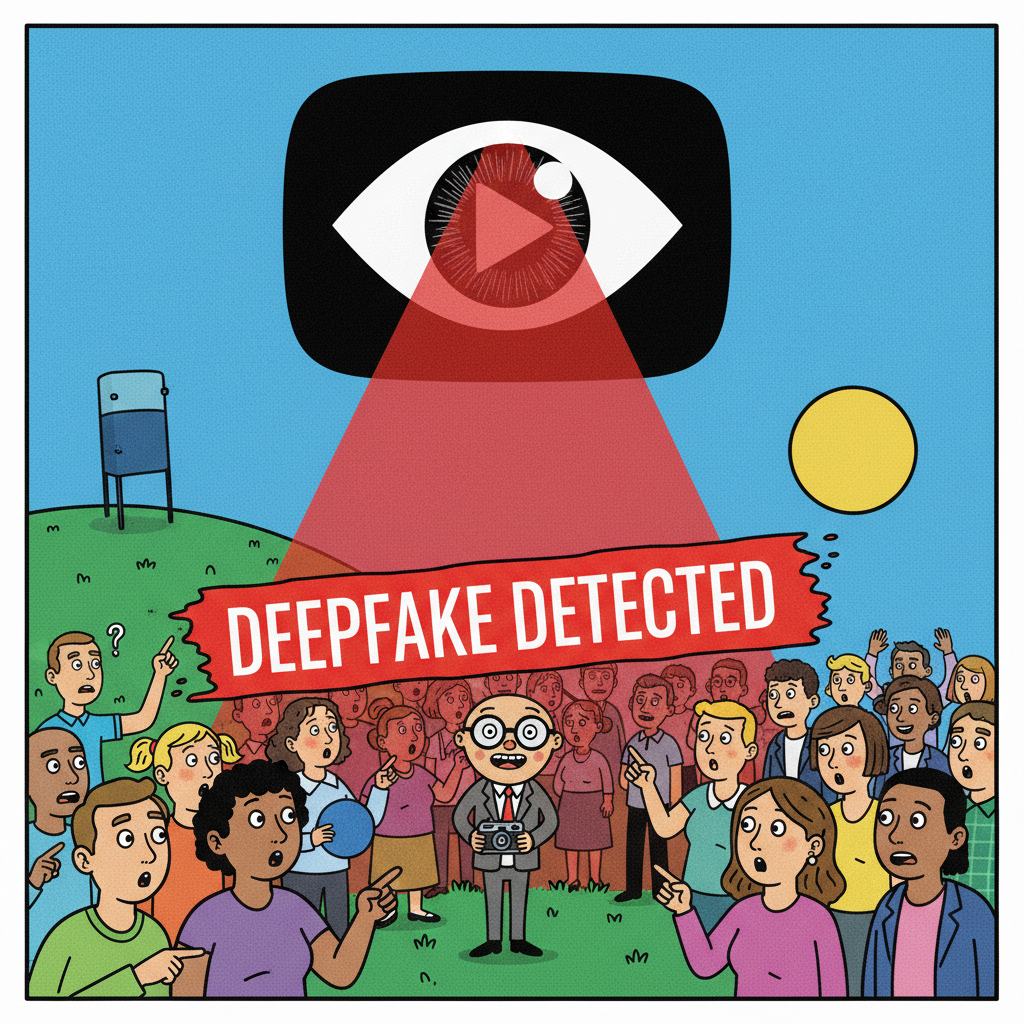
SAN BRUNO, CA – YouTube announced today the expansion of its deepfake detection tool, now specifically calibrated to identify instances where politicians and journalists might accidentally utter an unvarnished truth. The platform, long a bastion of user-generated content and occasionally a source of verifiable information, stated the update aims to 'maintain the integrity of public discourse' by highlighting anomalies.
“Our new algorithm, codenamed 'Veritas,' is designed to flag any video where a public figure deviates from established talking points, uses unscripted honesty, or expresses a genuinely held, non-strategic opinion,” explained Dr. Evelyn Reed, head of YouTube’s Misinformation Paradox Division. “Early tests showed a remarkable ability to detect moments of pure, unfiltered candor, which our system then categorizes as 'highly suspicious activity' and potentially 'synthetic media.'
Initial reports suggest the tool is working overtime. “My feed is just a sea of red flags,” commented political pundit Chad Brobdingnag, scrolling through his YouTube Shorts. “Apparently, that clip of the senator admitting he hadn’t read the bill, or the journalist saying 'I don't actually know,' are now considered deepfakes. It’s disorienting.”
YouTube clarified that the tool is not intended to remove content, but rather to provide a 'truth-adjacency' warning label, allowing viewers to approach such rare, unadulterated statements with appropriate skepticism. The company is now exploring integrating the tool with its monetization policies, with truly honest videos potentially being demonetized for 'violating community standards of plausible deniability.'