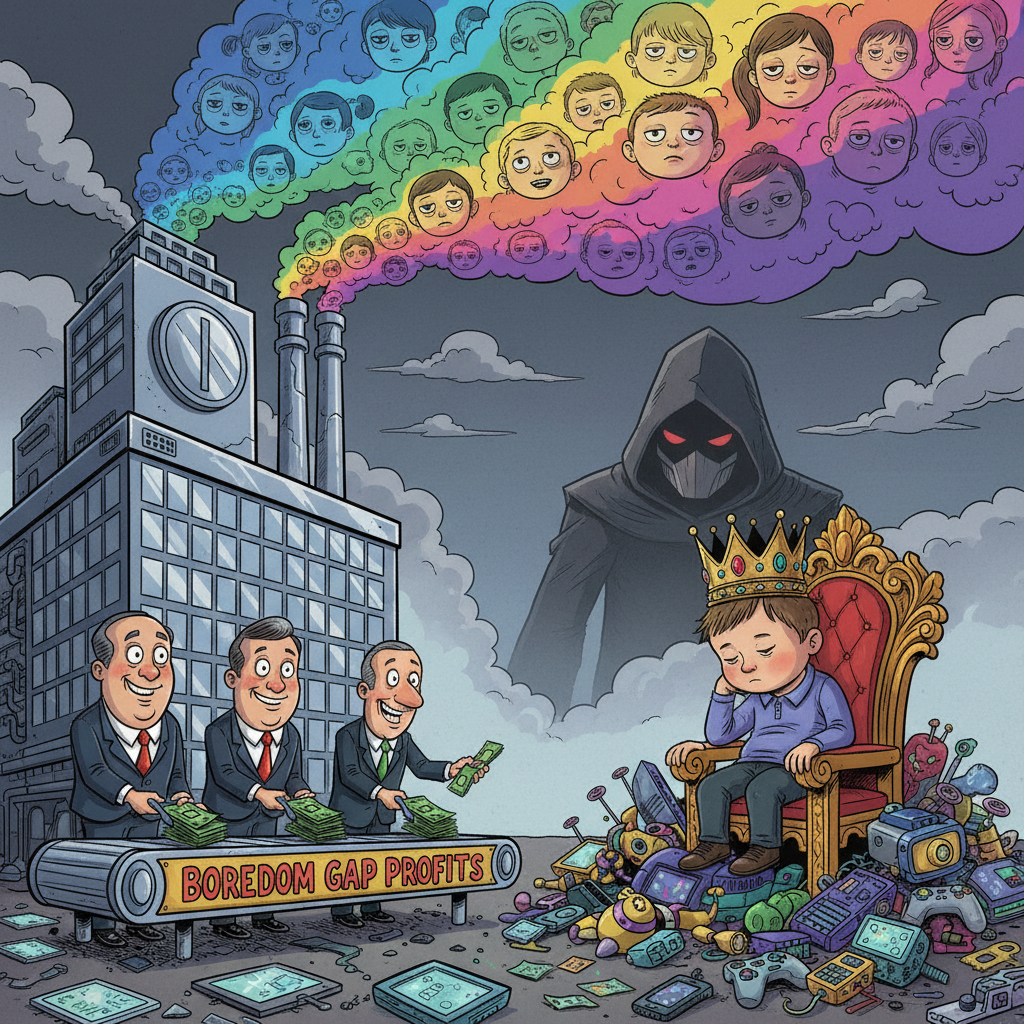
NEW YORK – A consortium of toy industry executives and child development specialists today released a groundbreaking report confirming that childhood boredom, particularly during extended breaks like spring break, has become a meticulously cultivated and highly profitable sector of the global economy. The study, titled 'The Strategic Cultivation of the Adolescent Apathy Market,' suggests that parents are not merely combating boredom, but actively participating in a complex, multi-billion-dollar ecosystem designed to alleviate it.
“For years, we’ve been telling parents that boredom fosters creativity,” stated Dr. Evelyn Pinter, lead researcher and CEO of 'Play-Doh & Prozac Solutions.' “What we failed to mention was that it also fosters a desperate, unyielding need for new products. It’s a beautiful, self-sustaining cycle. The more bored they are, the more toys they need. The more toys they get, the faster they get bored of them.”
The report highlights that the average American child experiences approximately 17 hours of 'critical boredom' during a typical spring break week, a figure that has remained remarkably consistent despite increased access to digital entertainment. Industry analysts attribute this resilience to advanced marketing techniques that subtly suggest current possessions are inherently less stimulating than new ones.
Mr. Rex Dynamo, Chief Innovation Officer for 'Gadget & Gizmo Corp,' echoed the sentiment. “We don’t just sell toys; we sell the promise of non-boredom. It’s a powerful, albeit fleeting, promise. Our R&D teams are constantly working on the next 'boredom buster' that will last just long enough for parents to feel justified in the purchase, but not so long that the child doesn’t need another one next season.”
Parents are advised to embrace their children's ennui, as it is apparently the engine driving both their future purchasing habits and the entire toy industry. Just be sure to have your credit card ready.