SALT LAKE CITY — Lawmakers in Utah are scrambling to draft emergency legislation after a recent legislative session revealed that the act of 'thinking about what might happen next' constitutes a form of unregulated prediction market. The discovery has sent shockwaves through the state, which has long prided itself on its near-total prohibition of gambling.
“We’ve been so focused on physical casinos and online sportsbooks, we completely missed the most insidious form of wagering: the human mind,” stated State Senator Agnes Peterson, visibly shaken. “Every time you wonder if it’s going to rain, or if your toast will pop up, or if that email will finally arrive, you’re essentially placing a mental bet. It’s a slippery slope to existential ruin.”
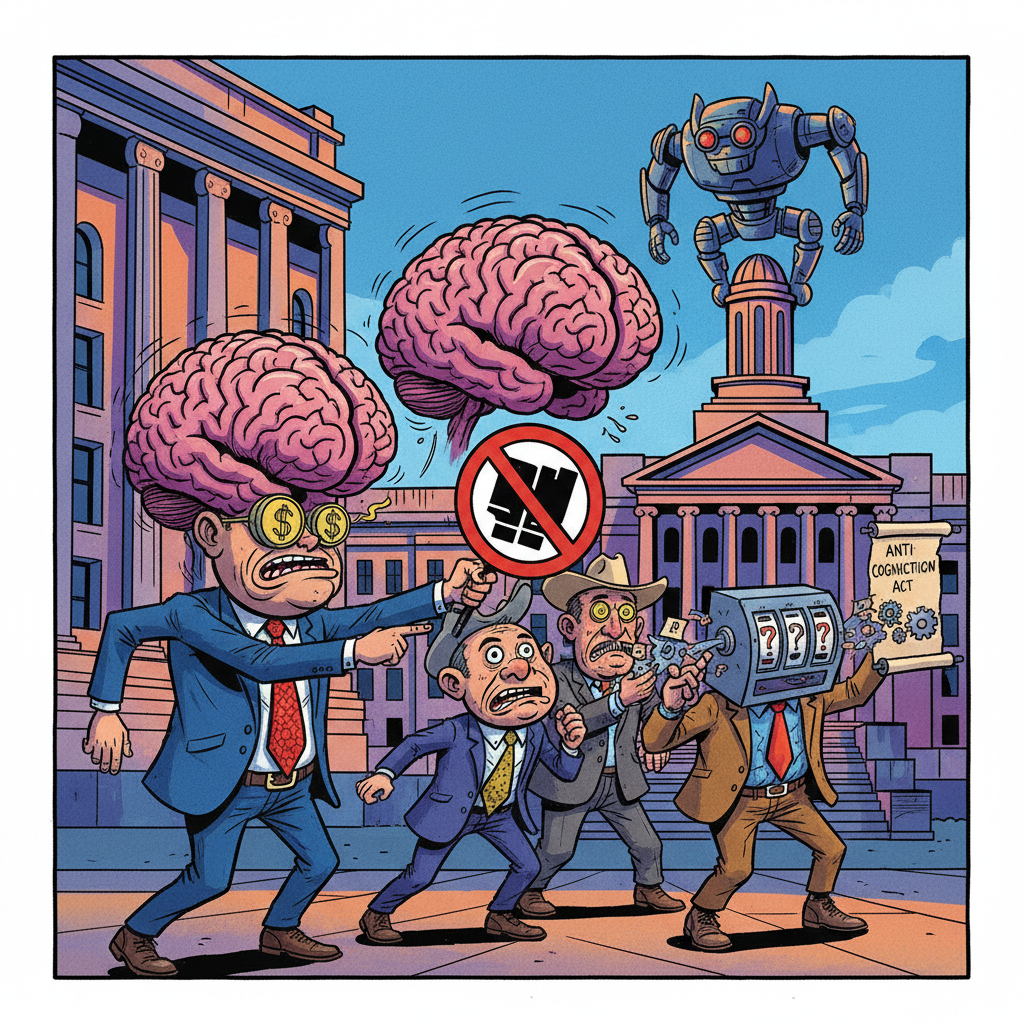
The proposed 'Cognitive Integrity Act' would outlaw any internal monologue or conscious thought process that involves assessing probabilities or anticipating future events. Exceptions are being debated for basic motor functions and the ability to recall where one left their car keys, though some hardliners argue even that borders on risky speculation.
Dr. Quentin Ponder, a newly appointed state mental health czar, warned of the dangers. “Imagine the addiction. People constantly predicting their commute times, the outcome of a conversation, or even what they’ll have for dinner. It’s a constant, low-grade flutter of the mind, and frankly, it’s un-Utahan.”
Critics argue the law is unenforceable, but Senator Peterson remains resolute. “We will develop technologies to monitor and, if necessary, gently redirect these errant thought patterns. For the spiritual well-being of our citizens, no prediction is too small to go unpunished.”
Sources close to the legislative process admit the biggest hurdle is finding a way to pass the bill without any legislator having to predict its success.