WASHINGTON D.C. — A consortium of leading economists and social scientists announced today that the ubiquitous online phenomenon known as the 'thirst trap' has been officially reclassified as a critical economic indicator. Researchers from the National Bureau of Economic Research (NBER) and several prestigious universities concluded that the weekly output of alluring social media posts directly reflects the health and trajectory of national and global markets.
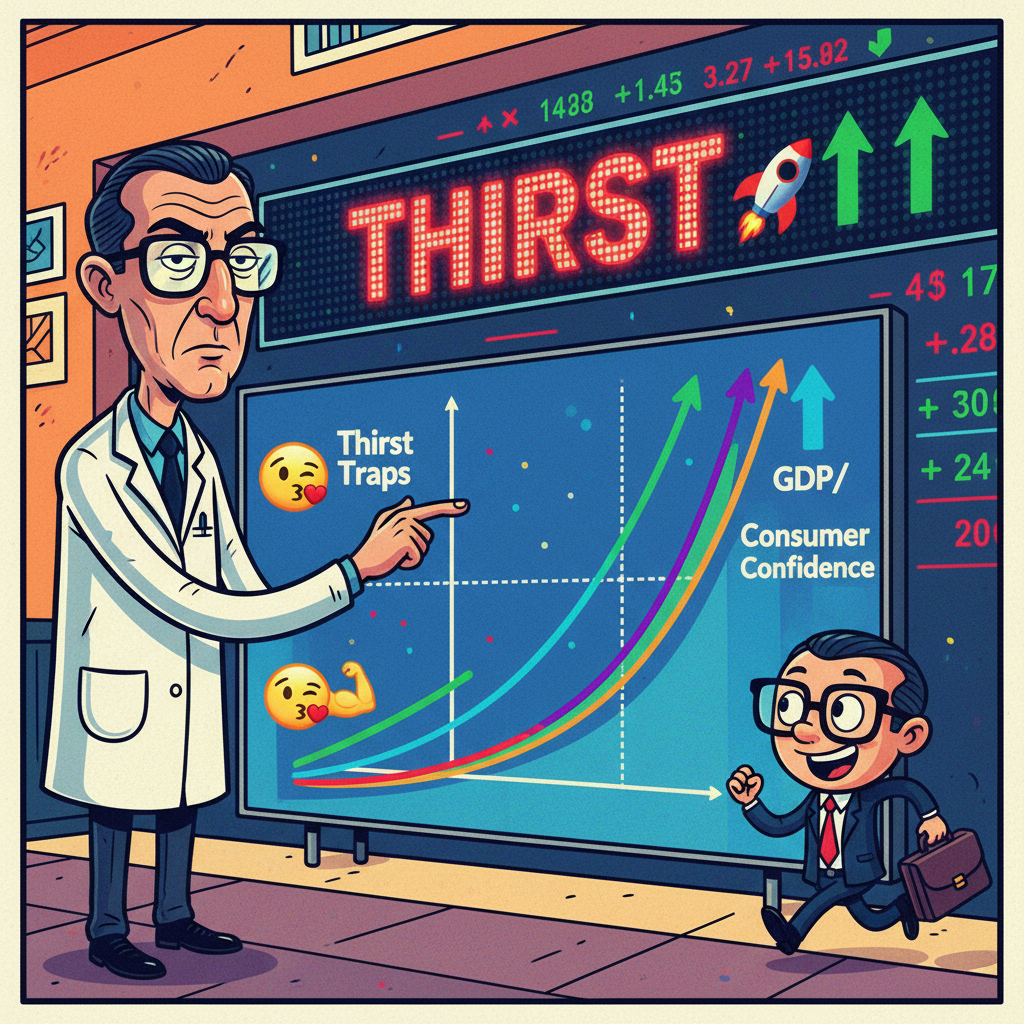
“For years, we’ve been looking at archaic metrics like manufacturing output or unemployment rates,” stated Dr. Evelyn Reed, lead author of the groundbreaking study, during a press conference. “It turns out, the true pulse of the economy isn’t found in quarterly reports, but in the sheer, unadulterated confidence exuded by someone posing artfully by a pool. A high-quality thirst trap isn't just a picture; it's a leading indicator of disposable income and a robust service sector.”
The study, titled 'The Scarcity of Shirtless Selfies and Its Impact on the S&P 500,' analyzed millions of social media posts alongside traditional economic data over the past decade. Findings indicate a statistically significant correlation: a surge in well-executed 'thirst traps' often precedes periods of economic growth, while a noticeable decline in their frequency or perceived quality typically signals an impending downturn.
“When people feel good, they post good,” explained financial analyst Chad Broxton, who was not involved in the study but has been tracking the 'Thirst Trap Index' for his private clients. “And when they post good, they spend good. It’s basic human psychology, just with more abs and strategically placed shadows.”
Experts are now calling for central banks to monitor 'Thirst Trap Volume' as closely as inflation rates, suggesting that a particularly potent celebrity 'trap' could even warrant an emergency interest rate hike. The Federal Reserve is reportedly considering adding a 'Thirst Trap Committee' to its next quarterly meeting agenda.