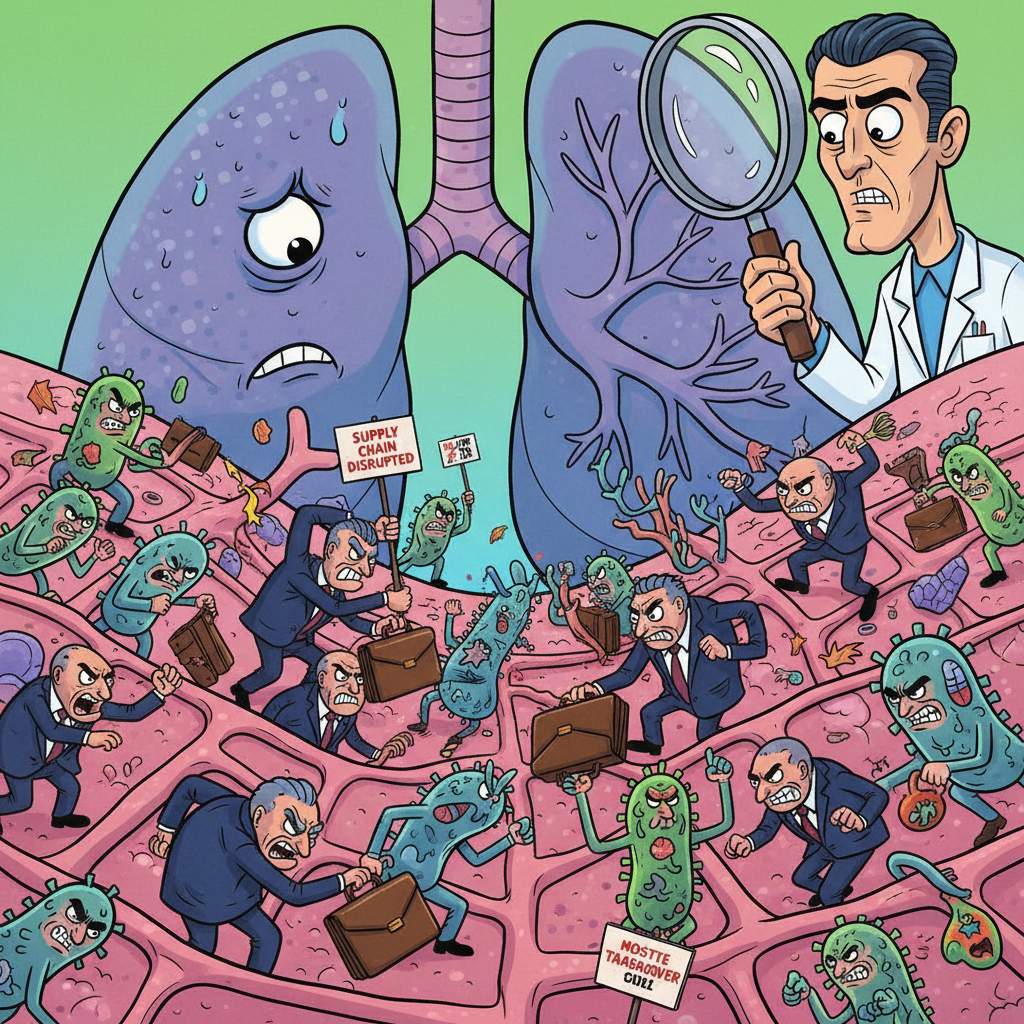
WASHINGTON D.C. — A groundbreaking study published in *mBio* has confirmed what many have long suspected: the microscopic organisms inhabiting your respiratory tract are not merely coexisting, but are actively engaged in sophisticated, cutthroat economic warfare. Researchers found that species like *Streptococcus pneumoniae* and its benign cousin, *Streptococcus mitis*, aren't just sharing real estate; they're vying for resources, establishing monopolies, and occasionally resorting to what experts are calling 'microbial hostile takeovers.'
“We initially thought they were just, you know, hanging out,” explained lead bacteriologist Dr. Fiona Glandular. “But upon closer inspection, we observed intricate trade routes for nutrients, aggressive territorial expansion, and even rudimentary forms of corporate espionage. It turns out your lungs are basically a tiny, moist Wall Street.”
The study details how *S. pneumoniae*, known for causing pneumonia and other severe infections, often acts as a predatory hedge fund, leveraging its ability to cause inflammation to disrupt the local ecosystem and corner the market on essential sugars. Meanwhile, *S. mitis*, typically a harmless resident, appears to be a more ethical, community-focused co-op, often struggling against its more aggressive counterparts.
“It’s a classic tale of the little guy trying to make an honest living against a multinational conglomerate that doesn’t care about collateral damage,” Dr. Glandular added, noting that some bacterial colonies even seem to be developing their own internal lobbying groups. “We’re now exploring if they have tiny, microscopic offshore accounts.”
Future research aims to identify if these bacterial economies are subject to boom-and-bust cycles, and if a tiny, internal Federal Reserve could be established to prevent systemic microbial collapse.