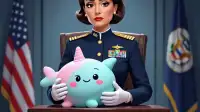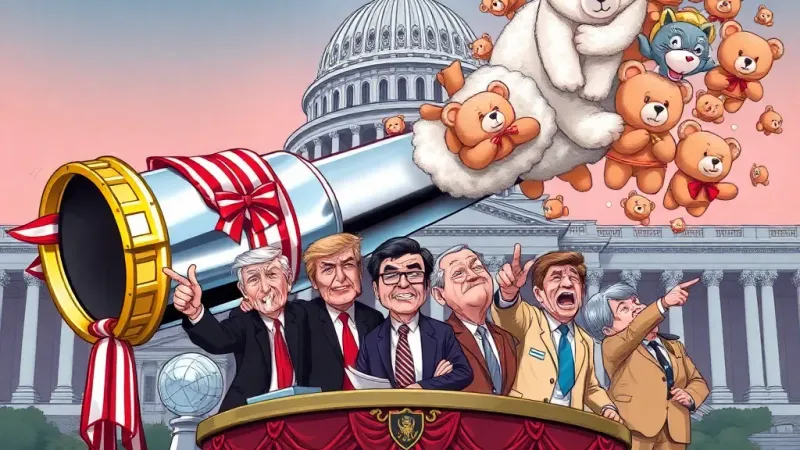
WASHINGTON D.C. — In a move hailed by officials as a paradigm shift in humanitarian response, the nation's capital has deployed over 1,000 donated stuffed animals across prominent government buildings, asserting the display represents an "unprecedented leap in soft power diplomacy." The initiative, meant to symbolize displaced Ukrainian children, is anticipated to generate "significant emotional leverage" on the international stage, according to a press briefing Tuesday.
"For too long, our approach to complex global crises has been bogged down by logistical nightmares like aid convoys, resource allocation, and, frankly, the messy realities of human suffering," stated Dr. Quentin Marsh, Director of Public Sentiment Optimization at the newly formed Bureau of Symbolic Geopolitics. "These plushies cut through all that. They are a universal language of pathos. One look at a Paddington Bear silently advocating for geopolitical stability and you understand the immense, non-monetary impact we're achieving." Marsh cited internal polling suggesting a 0.7% increase in vague feelings of 'being aware' among congressional staffers since the bears were installed.
The initiative comes after months of deliberation on how to best convey "deep concern" without incurring the cumbersome costs or political complexities associated with direct humanitarian aid or robust policy changes. A legislative aide, speaking anonymously, revealed the "Plushie-to-People Proxy Program" was championed as "the ultimate win-win." "We get fantastic optics, heartfelt social media posts, and the warm glow of self-righteousness, all while avoiding any difficult votes or substantial budgetary commitments," the aide explained. "It's literally the lowest-effort, highest-return strategy we've ever cooked up."
Critics, primarily from long-established but apparently less innovative aid organizations, suggested the display might not be a direct substitute for food, shelter, or educational resources for actual displaced children. "While a teddy bear can symbolize a child, it cannot feed one," commented Anya Petrova, CEO of Global Relief Now, which still inexplicably focuses on delivering tangible goods. "Our field teams report that most displaced families would prioritize a hot meal over a poignant photo opportunity, but perhaps we're missing the strategic long game here."
Despite such antiquated views, officials remain optimistic. Plans are reportedly underway to diversify the "Soft Power Zoological Corps" with strategically placed rubber ducks to highlight water scarcity and miniature plastic houses to raise awareness for housing shortages. "We project that by Q3, we could have a fully representative miniature crisis tableau, completely independent of any actual resource expenditure," Dr. Marsh concluded, adjusting a small, knitted unicorn on a desk in the State Department lobby.
Critics argue the bears are too soft, lacking the sharp edges required for effective geopolitical engagement.