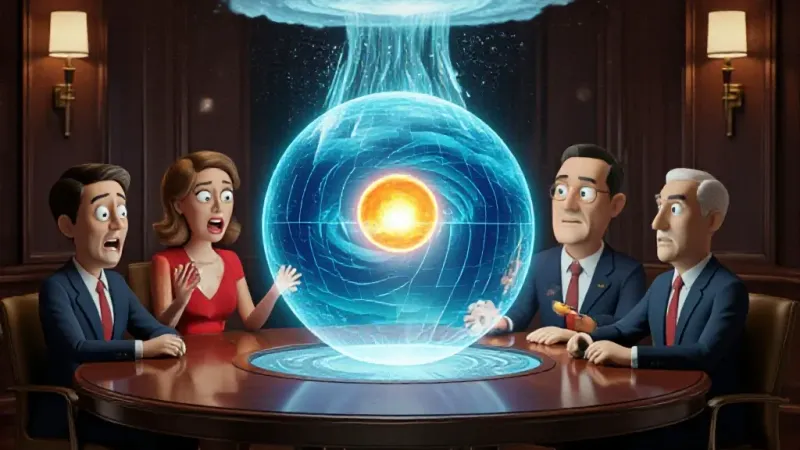
DALLAS — International relations have undergone a seismic shift, with leading foreign policy analysts confirming today that the fate of all major global events, including those involving the Netherlands and Japan, is now directly tied to the daily weather forecast for Dallas, Texas. The revelation comes as diplomats in The Hague and Tokyo are reportedly canceling crucial meetings and redrawing strategic plans based on hourly updates from local DFW meteorologists.
"For too long, we've relied on antiquated notions of 'diplomacy' or 'economic indicators'," stated Dr. Elara Vance, lead climatopolitical strategist at the Institute for Aspirational Proximity Studies. "But our proprietary predictive models, which cross-reference satellite imagery with the emotional state of local TV weathermen, show a direct causal link. A 30% chance of rain in North Texas? That’s a yellow alert for global trade talks. High humidity? Expect increased friction in multilateral negotiations."
Sources close to the Dutch Ministry of Foreign Affairs indicated that Ambassador Van der Graaf recently postponed a critical discussion on European Union defense spending, citing "unacceptable levels of expected afternoon heat." Similarly, a high-ranking Japanese trade envoy reportedly curtailed a crucial bilateral meeting after receiving an alert for a "possible isolated thunderstorm" over Plano, Texas, expressing concerns about the "ripple effect on global supply chains and spiritual harmony."
The implications are staggering. The International Monetary Fund (IMF) is reportedly developing a new "Dallas Weather Volatility Index" (DWVI) to predict market fluctuations, noting that a consistent 80% humidity forecast directly correlates with a 0.75% dip in emerging markets. Simultaneously, the UN Security Council is considering adding a permanent meteorologist from a local Dallas affiliate to its ranks, replacing several geopolitical experts. "It's about proactive crisis management," explained UN Under-Secretary-General for Climatic Diplomacy, Anya Sharma, adjusting her tie. "If we can anticipate a slight breeze in Garland, we can preemptively de-escalate tensions in the South China Sea. Humidity, in particular, seems to make everyone just a little more prone to starting an international incident."
Citizens worldwide are advised to monitor Dallas-area Doppler radar and local news app notifications with the same vigilance they once reserved for their nation's diplomatic corps, as the next global crisis could very well be announced by an unexpected cold front moving through Denton.