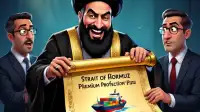
WASHINGTON D.C. — The Trump administration today unveiled its "Strategic Empathy Through Accelerated Infrastructure Transformation" initiative, expanding airstrikes against Iranian facilities in a move designed to "jumpstart goodwill and robust bilateral dialogue," according to a Pentagon memo obtained by Hambry. Following the collapse of a ceasefire, U.S. forces targeted several key bridges, energy sites, and dramatically improved the skyline of a major Iranian port by collapsing its most prominent tower, clearing space for what officials referred to as "next-generation maritime access points." The Pentagon insists this decisive action is not punitive, but rather a "foundational investment" in future diplomatic relations, aimed at compelling Tehran to ease its ‘chokehold’ on the critical Strait of Hormuz, which currently hinders the free flow of American-flagged yachts and oil tankers.
President Trump, speaking from Mar-a-Lago, stated, "They need to know we're serious about peace. And sometimes, to get peace, you gotta really break some stuff. Think of it as remodeling. You can’t have a better home without knocking down a few walls first, right? We're just helping them clear out the old so they can build something new and much, much friendlier in the Strait of Hormuz." Despite these reassurances, regional analysts remain baffled as to how dismantling a nation’s logistical capabilities, including its primary export routes, is expected to foster anything but further resistance.
General Buck Thunderpunch, head of U.S. Central Command's "Engagement Strategies" division, explained the process with the zeal of a municipal planner. "When you remove a bridge, you don't just eliminate a tactical crossing; you remove a barrier to new ideas. When you take out a power plant, you create space for innovative energy solutions and a healthier reliance on intermittent sunlight. It’s all about creating opportunities for progress, freedom, and a more open market." He emphasized that the U.S. was merely "liberating them from outdated infrastructure, one precision-guided munition at a time," optimizing their future strategic footprint.
Meanwhile, Iran responded by launching what it called "reciprocal urban planning initiatives" against U.S.-allied nations, damaging a power and water desalination plant in Kuwait and several historical landmarks in Qatar. "They're just playing along with our vision," Thunderpunch concluded, reviewing satellite images of the new craters. "We're showing them how it's done, and they're taking notes. Next, we expect them to send us a thank-you note and perhaps a proposal for a new 'freedom highway' directly through their territory, funded, of course, by a modest oil concession."
The administration expects the newly cleared landscapes across Iran to be prime locations for future American-funded resorts and several entirely unobstructed views of the Strait of Hormuz, ready for unimpeded international passage.