
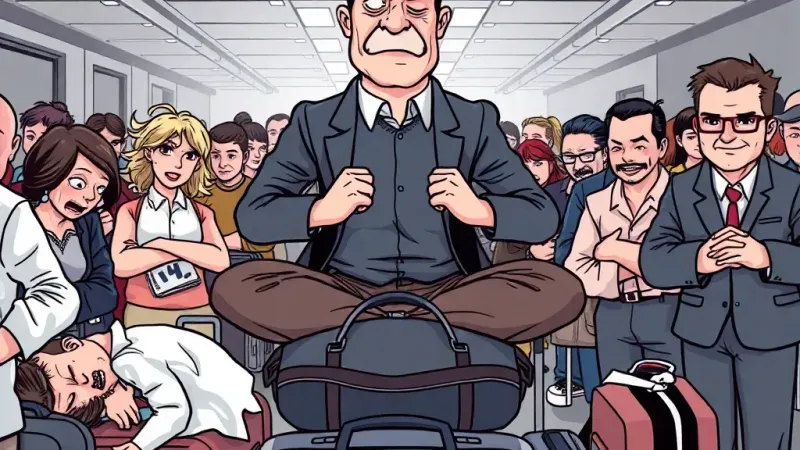
Atlanta, GA – Despite the recent resolution of an internal pay dispute, the Transportation Security Administration (TSA) has clarified that persistent four-hour security lines at major hubs like Hartsfield-Jackson International are not, in fact, a malfunction, but a deliberate "pre-boarding mindfulness exercise." The agency insists the extended wait times are designed to foster patience and self-reflection among travelers before they embark on potentially stressful journeys, solidifying the queue as a crucial component of the modern travel experience.
"For too long, the travel experience has been rushed, leaving passengers disoriented and unprepared for the unique stresses of air travel," stated Dr. Kendra Beaumont, TSA’s newly appointed Director of Passenger Wellness and Experiential Flow, in a press conference held from a queue stretching through Terminal F. "Our meticulously gathered data, spanning decades of consistent four-hour waits, demonstrates a statistically significant increase in pre-flight introspection, phone battery drainage, and an appreciation for the simple act of standing still. This isn't a problem; it’s a profound opportunity for collective stillness and personal growth."
The initiative, informally dubbed "The Gauntlet of Gratitude," encourages passengers to utilize the prolonged queue for activities such as reviewing their life choices, contemplating the geopolitical landscape of airport pretzel prices, or simply staring blankly into the middle distance. Early adopters report a newfound appreciation for sitting down, regardless of the destination. "I used to dread these lines," admitted frequent flyer Marvin Krell, wiping a tear from his eye after a 3.5-hour wait for a domestic flight. "But now, I see it as my quarterly digital detox. I’ve started writing poetry in my head. Yesterday, I composed an ode to my carry-on bag, which I haven't seen in over two hours."
Critics who pointed out that lines were often just as long, if not longer, even before the recent pay dispute were swiftly dismissed. "That's precisely the point," Dr. Beaumont countered, gesturing with a well-worn copy of *The Art of Non-Doing*. "The system has always been optimized for this experience. We’re just now giving it the official recognition it deserves. It’s less about moving people through a checkpoint and more about moving their souls through a transformative passage." The agency further announced plans to integrate optional meditation soundtracks and sponsored 'mindfulness-moment' prompts into digital queue signage, further enriching the stationary journey towards personal enlightenment.
Moreover, the TSA believes the extended waits serve a vital, if unstated, security function. "A truly relaxed and self-actualized individual is less likely to harbor ill intent," explained a senior TSA analyst, who spoke on condition of anonymity while slowly inching forward in line himself. "By the time they reach the scanner, most passengers have achieved a state of such profound resignation that they barely notice their shoes are off. It’s a very effective deterrent, if you think about it."
The TSA hopes that by reframing the delays as a beneficial activity, public perception will shift from annoyance to appreciative acceptance. "Ultimately, we’re not just securing the skies; we're securing inner peace, one interminable wait at a time," Dr. Beaumont concluded, before adding that she had personally achieved enlightenment during a particularly gnarly morning rush, specifically around the moment she realized her flight had already departed.