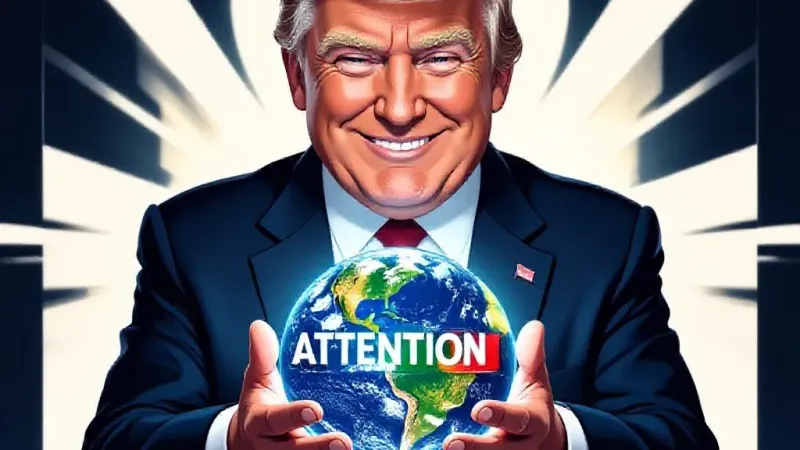
WASHINGTON D.C. — Former President Donald Trump has unilaterally placed new U.S. sanctions against Russia on an indefinite hold, sparking immediate confusion and alarm from Ukrainian President Volodymyr Zelenskyy and global allies. Trump’s office released a terse statement attributing the pause to "national interests," a phrase sources close to the former president confirmed refers primarily to his own immediate, insatiable need to dominate the news cycle.
Zelenskyy, speaking with visible frustration from Kyiv, called the decision "unfortunate" and warned it would unequivocally embolden Russia to continue its assault on his nation. However, a high-ranking official familiar with Trump's strategic calculus, who requested anonymity while meticulously polishing a gold-plated golf driver, clarified the move was less about geopolitical strategy and more about a "critical, self-evident truth: you don't make big, splashy international decisions without giving the Big Man his moment." The official added, with a shrug, "He just wants to see who calls first, Kyiv or Mar-a-Lago, and then complain about the call quality."
The sudden freeze on punitive measures sent ripples of bewilderment across diplomatic circles. European leaders, already accustomed to Trump’s unpredictable foreign policy, reportedly held emergency Zoom calls that mostly consisted of delegates muttering, "Again? Really?" One senior German diplomat, speaking off the record, admitted, "We’re honestly just trying to figure out if this is a chess move, a tantrum, or just him forgetting where he put the sanctions folder."
Political analysts confirmed the strategy was less about policy and more about performance. Dr. Karen Finch, Director of the Institute for Vexing Strongmen Studies, observed, "This isn't foreign relations; it's emotional blackmail on a global scale. He's essentially poking the entire international order to see if it’ll text back, then demanding an apology for making him wait. It’s a classic Trumpian power play: create maximum chaos, then position yourself as the only one who can fix it, even when you were the one who broke it." She further suggested a behavioral psychologist might be a more useful consultant than a Kremlinologist in understanding current U.S. foreign policy.
Kremlin officials, meanwhile, issued a statement praising the "sensible pause in unnecessary provocations" and expressed optimism for "further constructive dialogues," presumably after Trump had sufficiently basked in the ensuing international uproar and received the appropriate number of phone calls acknowledging his continued global relevance. Financial markets reacted with a mix of confusion and weary resignation, as futures traders reportedly began incorporating a new "Trump Whim Index" into their algorithms for future geopolitical risk assessments, primarily tracking how many times the former president tweets before noon.
The true national interest, it seems, is ensuring the former president never, ever feels left out of a headline, regardless of the cost to alliances, national security, or democratic norms.