
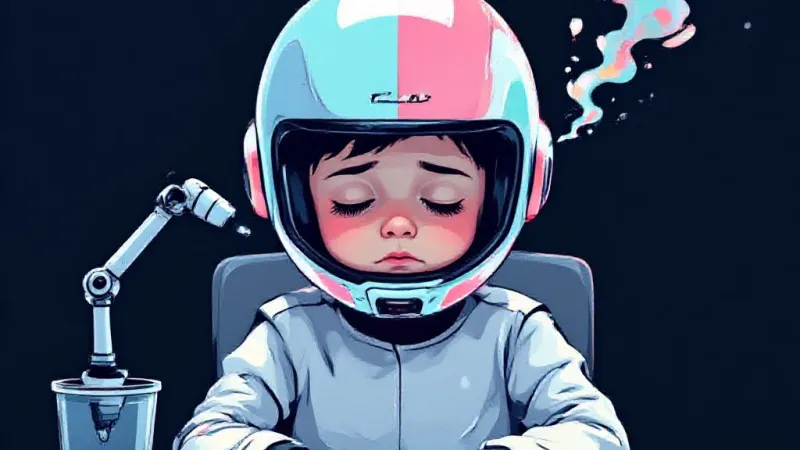
Leading toy manufacturer Spin Master and mobile gaming giant Supercell announced a groundbreaking partnership this week, revealing a new line of physical toys designed to seamlessly extend children's digital engagement into the physical world. The initiative aims to ensure brand continuity and prevent what industry insiders have termed "off-brand thoughts" during critical developmental periods, protecting precious mental real estate from the dangers of undirected imagination.
"Our goal is to provide a truly holistic, 360-degree brand immersion, from the moment a child picks up a screen to the moment they finally put it down," stated Skip Wallet, Head of Perpetual Engagement at Spin Master. "These physical manifestations of beloved characters aren't just toys; they're loyalty anchors, ensuring that even during offline hours, the child's imaginative play remains firmly within our carefully curated IP ecosystem. It's about optimizing their entire mental landscape for maximum lifetime value, ensuring a frictionless transition across all monetization touchpoints."
The companies cited a new report from the Hambry Institute for Aspirational Proximity Studies, which found that children exposed to "unmanaged free play" outside established digital narratives showed an alarming propensity for inventing their own stories, leading to a measurable decrease in future microtransaction potential and overall brand stickiness. "We simply cannot risk children developing unguided narratives," explained Dr. Penelope Cashcow, lead researcher on the study. "Allowing them to imagine beyond our intellectual property is not only creatively inefficient but a significant threat to market share. These toys offer critical brand reinforcement, guiding their imagination back to profitable pathways and pre-approved play scenarios."
Upcoming iterations of the toy line are rumored to include integrated biometric sensors capable of tracking focus duration and emotional resonance, wirelessly feeding engagement data back to a centralized algorithmic dashboard for "play optimization." Parents can expect push notifications alerting them when their child’s play deviates from pre-approved story arcs or when they show interest in unmonetized activities like "tree climbing" or "reading." Future models will also offer premium "imagination packs" available via in-app purchase, allowing children to unlock new, pre-scripted narratives for their physical toys.
The move marks a significant leap in converting organic childhood imagination into predictable, measurable economic outputs. Soon, children won't just be playing with toys; they'll be performing real-time market research, ensuring their play is always productive and, more importantly, profitable. The future of play, it seems, is less about make-believe and more about making bank.