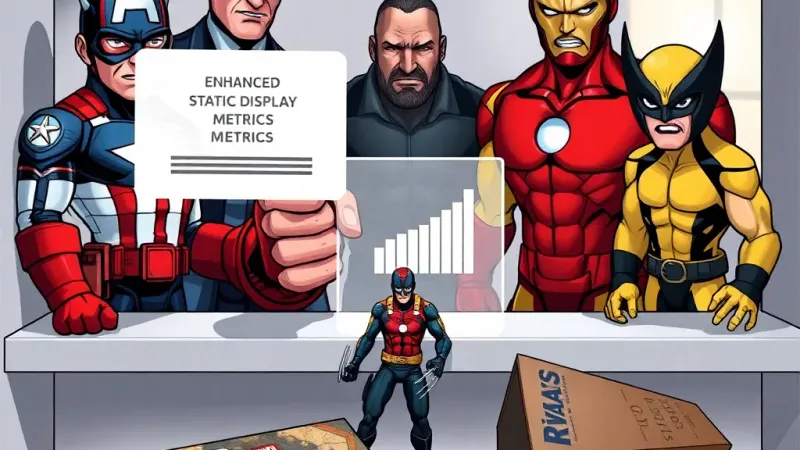
NEW YORK – In a bold counter-move against the recently announced "Marvel Rivals" video game, Hasbro’s venerable Marvel Legends action figure line has unveiled a comprehensive new strategy aimed at reasserting its dominance in the crowded superhero IP ecosystem. Dubbed "Project: Shelf-Domination," the initiative seeks to leverage the figures' inherent physical presence to counteract the digital allure of NetEase's upcoming 3v3 team-based brawler.
"We recognize that in today’s attention 2, every fraction of a second a consumer spends engaging with an IP is a battle won," stated Brenda Choi, Senior VP of Tactical Brand Preservation at Hasbro. "While 'Marvel Rivals' offers dynamic, real-time engagement, our data indicates a significant untapped potential in what we term 'sustained passive visual engagement.' Simply put, a 6-inch Captain America on your desk is a constant reminder of the brand, a visual anchor that a fleeting digital experience cannot replicate. It's about owning a piece of the narrative, not just renting it for 45 minutes a day."
The core of Project: Shelf-Domination involves a renewed focus on "optimal pose-ability for static display," according to internal memos reviewed by Hambry. This includes a new proprietary "Dynamic Stillness" engineering philosophy, which, according to Choi, "ensures that even in a static pose, the figure subtly communicates kinetic potential." Future waves of figures will feature slightly improved elbow articulation on select characters, an expanded line of 'battle-damaged' accessories, and a new tiered loyalty program that rewards consumers for photographing their figures in increasingly elaborate, non-action-oriented tableaux. Initial rollouts are also expected to feature enhanced base sculpts designed to "maximize dust-collection appeal" and prevent figures from being accidentally knocked over by passing siblings or pets. Furthermore, a limited-edition series of "Desk Protector" figures, each featuring an iconic Marvel character posed defensively over a miniature laptop accessory, is planned for Q3.
Industry analysts are reportedly divided on the efficacy of such a direct confrontation. Dr. Kenji Tanaka, a professor of Post-Play Ethnography at the University of Southern California, commented, "This is a fascinating case study in multi-platform IP management. Hasbro is essentially trying to weaponize nostalgia and tangible property ownership against the ephemeral nature of digital engagement. It's a high-stakes gamble to see if the joy of physically owning a piece of plastic still outweighs the dopamine hit of a perfectly executed 'Spider-Man swings in and kicks everyone' combo. In an age of endless digital subscriptions, the simple act of *having* something holds unique power."
Meanwhile, collectors expressed mixed feelings. "It’s about time they focused on what really matters: how good it looks sitting there doing nothing," said Marcus 'CollectorGuy87' Jenkins, a prominent action figure influencer with over 150,000 followers. "I'm not playing with these things; I'm curating an art installation that will eventually be worth 17% less than I paid for it. If Rivals wants to be a threat, it needs to figure out how to look good on my shelf."
Hasbro executives remain confident, however, citing preliminary focus group data indicating a 3% increase in "fond glances per desk item" for figures equipped with the new "Subtle Gaze Alignment" technology, which ensures characters always appear to be subtly judging the consumer's life choices. The company also announced a new initiative to embed tiny, non-removable NFC chips into figure bases, allowing collectors to "register" their figures and track their 'shelf-life metrics' via a proprietary app.
Ultimately, the company hopes to prove that nothing beats the satisfaction of spending $28.99 on something you can immediately forget about on your shelf until your roommate asks why you still collect toys.