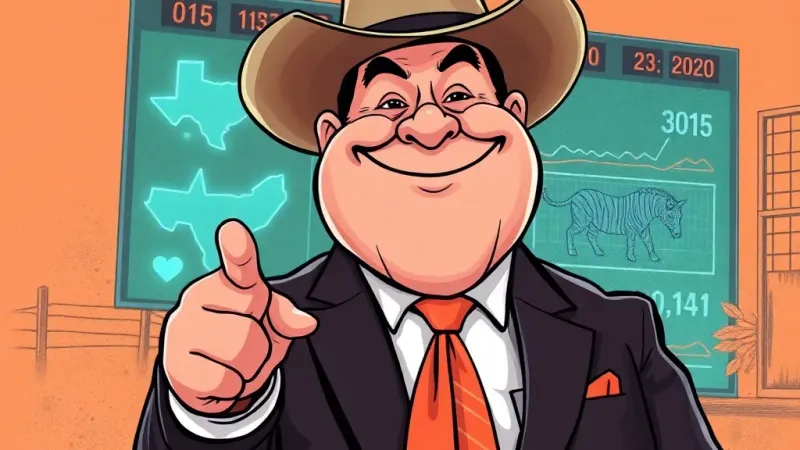
AUSTIN, TX – Citing a commitment to economic freedom and minimal government intervention, Texas officials have announced a groundbreaking reclassification of oversight for exotic animal adventure parks, effectively transitioning away from conventional animal welfare regulations.
The new framework, introduced under the "Texan Fauna Entrepreneurship Initiative" (TFEI), posits that animals housed in privately operated, revenue-generating parks inherently achieve optimal living conditions when their existence directly contributes to the state's Gross Domestic Product. According to a press release from the Governor's Office of Economic Prowess, "A happy giraffe is a profitable giraffe, and profitability is the most robust indicator of an animal's overall flourishing in a dynamic market environment."
"For too long, the discourse around exotic animals has been bogged down by sentimentalism and an outdated focus on 'natural habitats' that fail to recognize the innovative spirit of Texas business," stated Chet "The Regulator" Daniels, newly appointed Director of Market-Driven Fauna Optimization. "Our research indicates that park visitors, through their spending and positive reviews on platforms like 'SafariStars' and 'CritterClout,' are the ultimate arbiters of animal well-being. If an enclosure isn't generating sufficient ticket sales, it suggests the inhabitants might benefit from a more engaging, audience-centric environment, which could mean new enrichment activities, or perhaps, a more accessible photo opportunity." Daniels emphasized that any perceived decline in animal health would be swiftly rectified by the invisible hand of the market, as consumers would simply choose to spend their disposable income elsewhere, thus incentivizing park operators to maintain "prime inventory."
Conservation groups immediately decried the move as a catastrophic abdication of ethical responsibility. "This isn't 'conservation'; it's 'commodification' dressed in a cowboy hat," remarked Dr. Lena Varga, CEO of Wildlife Advocates for Genuine Protection. "To suggest that a tiger's health can be measured by its Instagram engagement rate is not just absurd, it's a dangerous precedent that prioritizes profit over the very existence of these magnificent creatures." However, Texas officials dismissed such concerns as "anti-enterprise sentiment" stemming from a misunderstanding of the state’s innovative approach to "experiential biodiversity asset management." They further clarified that any animal deemed "unprofitable" by the market would be reallocated to a "revenue-optimized habitat," a term still awaiting full definition.
The state hopes this pioneering initiative will cement Texas's reputation as a global leader in treating wildlife not as fragile ecosystems, but as robust, self-regulating small businesses.