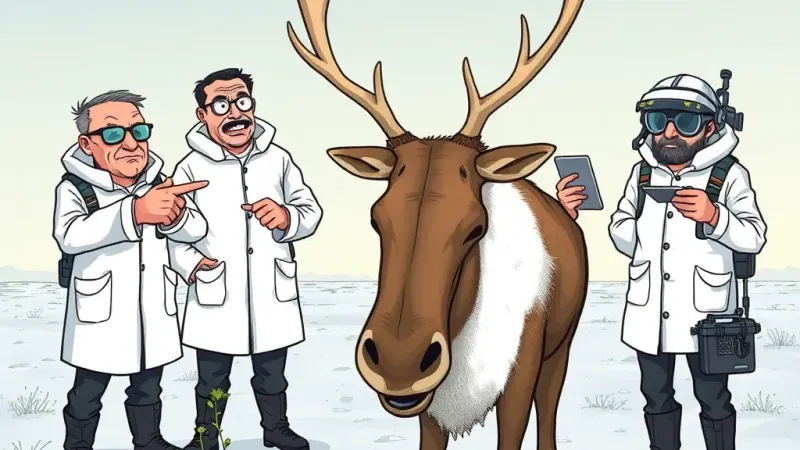
BUFFALO, NY — A comprehensive new study from researchers at the SUNY College of Environmental 2 and Forestry has delivered a stunning revelation: caribou require food to survive the arctic winter. The peer-reviewed findings, published this week, establish a “significant and previously understated correlation” between a caribou’s ability to consume lichen and its subsequent continued existence through cold months.
“For years, we’ve observed caribou attempting to make it through winter, and anecdotally, the ones that ate seemed to fare better,” explained lead researcher Dr. Evelyn Thorne in a press conference. “But this study provides the definitive, empirical evidence that what we’re seeing is indeed a complex interplay between ‘ingestion’ and ‘not dying.’ It’s a novel concept that we believe has profound implications for wildlife management.” Dr. Thorne highlighted that the primary dietary input, lichen, was identified as a “critical bio-caloric assimilation vector” without which caribou often experience a “terminal cessation of metabolic function.”
The research indicates that as lichen populations decline across the Arctic due to climate shifts and increased human activity, caribou face an unprecedented “nutritional viability crisis.” Policy makers are now grappling with the implications of ensuring these animals have access to their preferred food source, or as one unnamed official put it, “something to put in their bellies.” Preliminary proposals include piloting “Strategic Forage Replenishment Zones” and exploring “innovative caloric delivery systems” as potential mitigation strategies.
“This isn’t just about keeping cute fluffy deer alive; it’s about understanding the intricate bio-economic models of arctic ecosystems,” stated Dr. Kenneth Baines, a senior analyst with the Global Animal Resource Management Alliance, who was not involved in the study but spoke at length about its societal impact. “If we can’t guarantee a steady supply chain of lichen, or an appropriate dietary substitute, we’re looking at significant disruptions to the traditional caribou-based protein market. The cost-benefit analysis of letting them starve versus funding a massive lichen growing operation is complex, but we’re committed to finding the most economically efficient path forward.”
Experts stress that further studies will be needed to fully comprehend the implications of caribou not getting enough to eat, including investigations into whether other animals also require sustenance to stay alive.