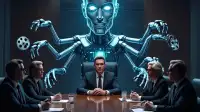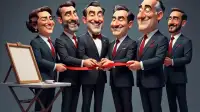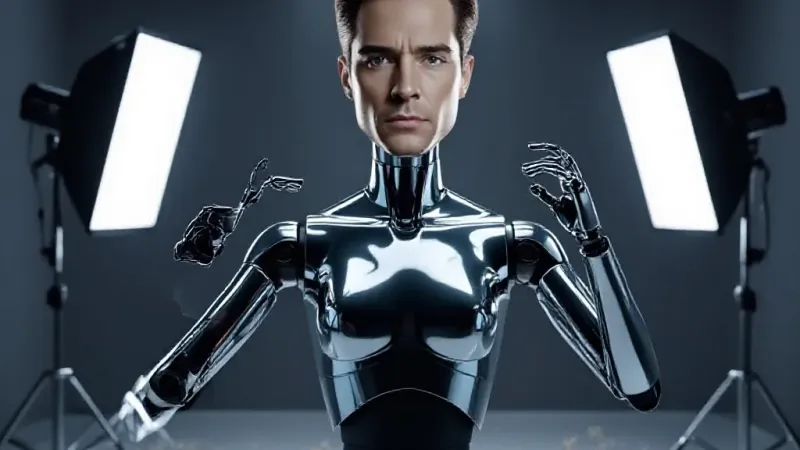
Hollywood studios yesterday unveiled a joint initiative to exclusively cast "Persona Synthetics"—AI-driven deepfake models derived from existing celebrity likenesses—in all upcoming feature films and television productions. The move, celebrated by industry titans as a "necessary evolution," aims to eliminate the unpredictable demands, exorbitant salaries, and occasional human foibles associated with traditional actors.
"Frankly, the talent pool has become an untamed swamp of 'creative differences' and 'wellness breaks'," stated Warner Bros. CEO Brenda Sterling during a holographic press conference. "Our Persona Synthetics offer unparalleled versatility: they can be 23, 37, or 80 simultaneously, never age, never demand a personal masseuse, and their trailer requests are solely for more processing power. We can generate 50 takes of a single tear falling perfectly, on cue, without a single 'do you know who I am?' rant." Sterling confirmed that the synthetic actors, which can be fine-tuned to specific emotional ranges and physical attributes, are already generating awards-worthy performances in test screenings, largely indistinguishable from their organic counterparts, and often even preferred for their consistent amiability.
The decision sent shockwaves through the Screen Actors Guild – American Federation of Television and Radio Artists (SAG-AFTRA), which immediately called an emergency meeting. "This isn't just about jobs; it's about the very soul of storytelling," remarked a visibly distraught union president, currently in contentious contract negotiations for a living wage for background actors. "What happens when art is manufactured solely for algorithmic efficiency? Where is the human experience, the raw vulnerability, the spark of genuine emotion?" Their concerns were swiftly dismissed by studio executives who highlighted that Persona Synthetics require no residuals, no health insurance, and can shoot 24/7 without union breaks or on-set therapists, revolutionizing production schedules and profit margins by an estimated 700%.
One veteran actor, who asked to remain anonymous for fear of having his own likeness licensed without consent, commented, "I just heard my agent pitching a deepfake of my younger self for a prequel series. He said it was 'more reliable,' 'didn't need a sobriety clause,' and 'could convincingly cry on demand for twelve hours straight.' I guess my 'soul' doesn't show up on a balance sheet." Meanwhile, audiences, largely desensitized by years of uncanny valley CGI and heavily filtered social media, appear unbothered. Early focus groups report that a perfectly rendered, perpetually pleasant digital persona is often preferable to a real human with actual opinions or, God forbid, wrinkles. Market research suggests a significant demographic, particularly Gen Z, actively prefers the "frictionless emotional experience" of synthetic stars.
The only ongoing debate now is whether the AIs themselves should receive performance bonuses, or if that's "too much like actual work."