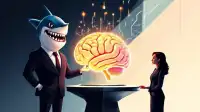

SAN FRANCISCO – Silicon Valley’s titans of artificial intelligence breathed a collective sigh of relief this week after a new national poll revealed over 70% of Americans are now concerned about AI’s existential risks to human survival. Industry leaders quickly lauded the shift in public focus, confirming it’s a far more convenient narrative than having to address the tangible harms their products are actively causing right now.
“It’s truly inspiring to see the public engaging with the truly profound, humanity-altering implications of artificial intelligence,” gushed Chad Sterling, CEO of 'OmniMind Global,' while gesturing expansively from his climate-controlled, yacht-sized office. “It shows a sophisticated understanding of technology’s trajectory. Frankly, this is much more productive than, say, focusing on the algorithms quietly redlining credit applications, the mass layoffs our automation causes, or the literal tons of data privacy we unilaterally decided you don’t need.”
The industry’s collective cheer reportedly drowned out the whirring of thousands of data center cooling units as execs celebrated the public’s pivot from mundane concerns like job displacement, energy consumption, and pervasive surveillance. According to sources close to a hastily organized, champagne-fueled "Existential Threat Celebration Gala," the shift marks a public relations coup of "Apocalyptic" proportions. “For years, we’ve been bogged down by petty debates about ethical AI, bias in models, and the carbon footprint of our server farms,” explained Dr. Evelyn Reed, head of the 'Institute for Theoretical Catastrophe Management' and a paid consultant for several major AI firms. “Now, people are thinking about *the end of days*. It makes our quarterly earnings look positively quaint.”
This newfound anxiety over sentient killer robots and the potential for a Skynet-esque takeover conveniently boosts investment, makes lobbying for fewer regulations easier, and ensures venture capital continues to flow into projects promising to either save or end humanity, rather than merely making human labor obsolete. The sheer, terrifying scale of the "potential" future threat makes present-day issues, like wage suppression, filter bubbles, and the concentration of unprecedented power in the hands of a few unelected tech bros, seem utterly trivial by comparison.
While Americans fret about a hypothetical robot uprising, the real-world impact of existing AI continues unchecked: algorithmic bias reinforcing systemic inequalities, unprecedented surveillance capabilities normalizing constant tracking, and the energy consumption of AI infrastructure on track to surpass the power usage of entire small nations. These are the actual threats, already online, already eroding trust and privacy, and already enriching a select few who now have a perfectly good excuse not to talk about it.
“It’s a fantastic distraction,” admitted one anonymous executive, polishing a golden CPU trophy shaped like a mushroom cloud. “As long as they’re worried about Judgement Day, they won’t notice we just fired 30,000 people and bought another island shaped like a neural network.”