
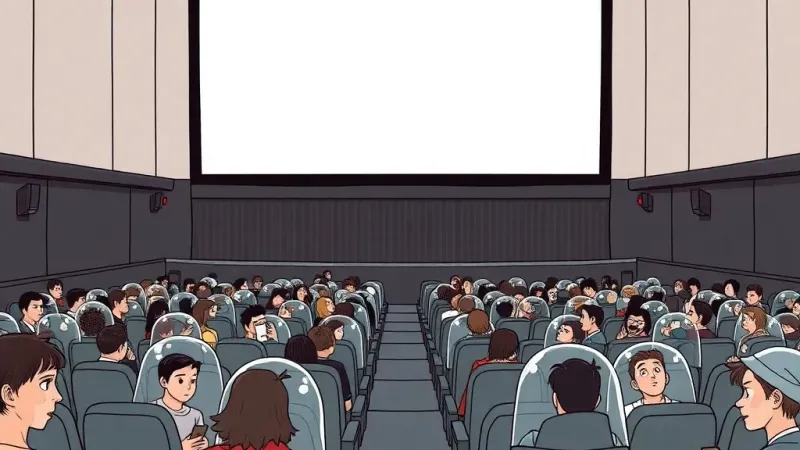
NEW YORK — In a move analysts are calling "the inevitable conclusion of late-stage entertainment consumption," major cinema chains announced today a radical pivot away from exhibiting motion pictures, opting instead to market their venues as "premium out-of-home distraction hubs." Citing exhaustive market research, industry executives conceded that films themselves were proving to be a significant deterrent to attendance, with consumers overwhelmingly preferring "structured ambient environments" over narrative content.
"For years, we tried everything: bigger screens, louder sound, reclining seats, even charging a small fortune for a lukewarm hot dog," stated Cassandra Vance, Chief Experiential Officer for the newly rebranded 'Cinema Alternatives Corp.,' addressing a holographic projection of shareholders. "But the data was unequivocal: the core product – the *movie* – was consistently ranking as the least desired element of the 'cinema experience.' What people truly wanted was a place that simply wasn't their house, ideally one where they weren't expected to engage with their own thoughts for two hours, or with a cinematic narrative for that matter."
The new strategy, set to roll out nationwide by late 2025, will see auditoriums repurposed into a variety of "distraction zones" and "premium formats." Offerings will include "Curated Existential Loitering Bays," where patrons can wander aimlessly in a dimly lit, temperature-controlled space; "Silent Scream Booths" designed for individuals to vent societal frustrations into soundproofed pillows; and "Social Recharging Cubicles," offering a guaranteed 90 minutes of uninterrupted screen time on one's personal device, free from familial judgment. For an additional "premium" fee, customers can opt for "Sensory Deprivation Pods" where they can simply sit in complete silence and darkness, described as "like being at home, but without the nagging feeling you should be doing something." The existing concession stands, however, will remain unchanged, continuing to offer a $17 bucket of popcorn and a $9 fountain drink.
Industry experts lauded the shift as a "bold, data-driven reimagining" of the struggling sector. Dr. Evelyn Reed, a leading consultant in "post-narrative leisure," noted, "This isn't about saving cinema; it's about saving the real estate and the concept of an anchor tenant. When you remove the pressure of having to watch a movie, suddenly the possibilities are endless. We're talking 'premium napping stations,' 'communal anxiety-sharing circles,' even 'upscale public restrooms for a discreet crying session.' The real genius is admitting that the problem wasn't the streaming services or the cost of a ticket, but the lingering expectation of storytelling or 'artistic merit' that we stubbornly clung to."
Initial pilot programs, featuring "immersive home-replica zones" complete with remote controls and a guaranteed internet connection, saw a 200% increase in attendance, though none of the patrons reported noticing the large format screen that was conspicuously left blank. A spokesperson confirmed that the "bowling alley" concept, while considered, was deemed "too demanding of physical activity" for the target demographic.
Analysts predict the new model will successfully attract customers looking for a reason to leave their house that isn't their own family, even if it’s just to scroll TikTok in a slightly larger, darker, more expensive room.