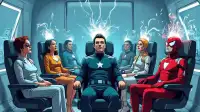
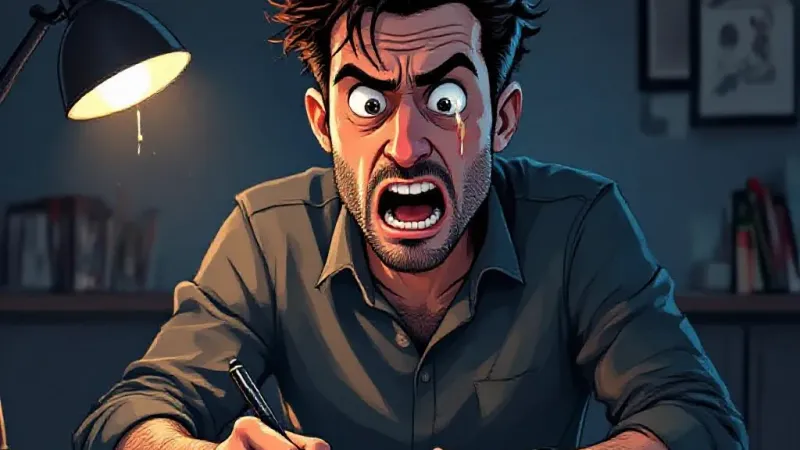
NEW YORK – Marvel Studios today confirmed that Spider-Man's iconic "spider-sense," the tingling precognition that has saved Peter Parker countless times from impending doom, was not a stroke of genius from a visionary artist but the direct result of a writer on a crushing deadline needing a quick plot fix. The revelation came during a candid, behind-the-scenes documentary promoting "Brand New Day," where former Marvel editorial staff detailed the frantic, last-minute scramble to give Spider-Man a convenient, inexplicable way out of a narrative corner in a particularly messy 1960s comic issue.
"We like to call it 'synergistic narrative optimization,'" explained Dr. Evelyn Reed, head of Brand Legacy Management at Disney-Marvel, in an exclusive interview with Hambry. "Sometimes the most impactful IP enhancements, the ones that truly resonate and spawn billions in merchandising, emerge not from inspired vision, but from sheer, unadulterated panic. It's incredibly efficient. Why spend months developing intricate character abilities, exploring psychological depth, or crafting nuanced lore when a harried bullpen writer can invent one in 30 seconds to avoid rewriting a whole panel?" Dr. Reed hinted that future Marvel content might even employ advanced AI to simulate similar deadline-induced creative bursts, bypassing inefficient human writers entirely for maximal quarterly returns.
Following the bombshell revelation, Marvel Entertainment has reportedly launched "Project Serendipitous Sprint," an internal initiative aimed at actively replicating these "happy accidents" at scale across all its lucrative properties. Teams are now explicitly encouraged to procrastinate, work under extreme duress, and only deliver core plot elements minutes before absolute, unmovable deadlines. "We’re finding that the creative friction generated by existential dread is a far more potent and cost-effective catalyst for 'viral' intellectual property than, say, thoughtful character development or coherent world-building," said a senior executive speaking on condition of anonymity, citing fears of being reassigned to the "Thoughtful Character Development" division, which sources say consists of a single intern and a wilting plant.
The news has sparked a wave of internal audits across Disney's sprawling intellectual property divisions, with forensic teams reportedly sifting through decades of archival material to identify other multi-billion-dollar plot devices born from similar creative desperation. Sources close to the company suggest that pivotal elements like Darth Vader's instantly recognizable helmet, the narrative convenience of the Infinity Gauntlet, and even the entire concept of the multiverse itself could, upon closer inspection, be traced back to a writer with a headache, an impending print deadline, and a desperate need for lunch. "It's validating, really," commented long-time fan Chad 'Web-Head' Peterson on X. "Knowing that my favorite character's power came from someone just trying to get home on time makes him even more relatable. It's truly a testament to the human spirit of 'good enough.'"
Ultimately, the discovery solidifies a core tenet of modern entertainment: genuine artistic inspiration, coherent narrative, and thoughtful character arcs are expensive, unnecessary liabilities when a profitable, multi-billion dollar franchise can be built just as easily on a desperate improvisation that accidentally sells action figures.