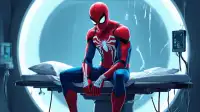
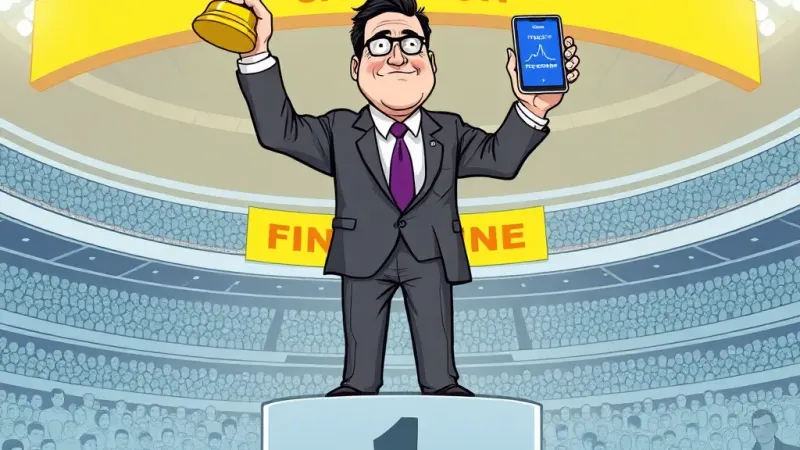
NEW YORK, NY – In a move that has effectively concluded the 2026 cinematic season before most people have even seen the 2024 slate, ticketing giant Fandango announced Monday that "Spider-Man: Brand New Day" has decisively claimed the top spot as the summer's most anticipated film. The groundbreaking poll, conducted with foresight previously reserved for long-range climate models and pension fund projections, places the web-slinger significantly ahead of Warner Bros.' "Supergirl" adaptation, rendering the intervening two years of production, marketing, and actual film releases largely ceremonial.
Industry analysts praised Fandango for setting a new benchmark in consumer data collection, noting the poll's ability to capture "pre-pre-pre-release sentiment." "This isn't just about 'buzz,' it's about establishing a multi-year emotional investment pipeline," explained Dr. Cassandra Vance, Head of Anticipation Economics at the Institute for Perpetual Hype Studies. "We're past merely generating excitement for a movie a few months out. The modern consumer demands the opportunity to commit their emotional and financial capital to intellectual properties a minimum of 24 months in advance. It’s critical for maintaining the illusion of choice within a highly curated entertainment ecosystem." Dr. Vance's research suggests that securing early anticipation is directly correlated with future merchandise sales, streaming service renewals through 2028, and a proprietary metric called "Pre-Franchise Fan Loyalty Units (PFFLUs)."
The definitive ranking comes as a relief to studio executives who, for decades, have been forced to grapple with the uncertainty of audience interest closer to a film's actual release date. "Think of the resources saved," remarked Marcus Thorne, CEO of Global Tentpole Productions, speaking from a yacht reportedly registered under the name "The Pre-Pre-Production Paradise." "Why bother investing in extensive market research closer to 2026 when Fandango has already told us what the people want? This data allows us to reallocate significant budget previously earmarked for 'story development' and 'actor payroll' directly into 'enhanced CGI spectacle' and 'strategic IP acquisition for 2032 and beyond.' It's simply good business practice to understand the future before it exists."
Cultural anthropologists are now studying the phenomenon, particularly the public's enthusiastic participation in surveys for media that remains largely conceptual. "The data suggests that the human brain, when presented with the endless complexities of real-world issues like climate change or geopolitical instability, finds solace and structure in predicting the cultural dominance of CGI sequels," noted Dr. Elias Kael, author of "The Anticipation 2: How We Learned to Love the Future's Future." He highlighted that Fandango's findings confirm a societal pivot towards scheduled escapism as a primary coping mechanism.
Critics, however, suggest that the only thing truly anticipated two years out is another Fandango poll.